Pedestrian Gate Automation and the Distribution Problem Nobody Talks About
The episode covered two major themes: pedestrian gate automation and the evolving fence-materials distribution landscape. The guests discussed Lockinox’s new “Venus” pedestrian gate operator, a low-energy, brushless DC system designed for ADA-style access on commercial and controlled-entry gates. Unlike traditional vehicle gate operators, the Venus uses app-based setup, customizable force settings, built-in obstruction reversal, and integrated outputs for accessories like mag locks, strikes, and keypads. The conversation highlighted how the unit can simplify installation, reduce the need for external safety devices, and expand what fence contractors can offer on pedestrian-access projects. The second half focused on distribution and pricing fairness in the fence industry. Sasha and Brian argued that fence companies have historically been underserved by distributors and sometimes blocked from buying spec’d materials competitively, especially when large buyers or favored accounts received much better access and pricing. Jim from Lockinox added that transparent tiered pricing based on volume is reasonable, but access and service should be fair for all fence contractors. The group agreed the industry is moving toward more open, direct, and less political buying models. The episode also included practical business talk on job-cost tracking, efficiency metrics, and where contractors might invest $100,000 to grow their businesses.
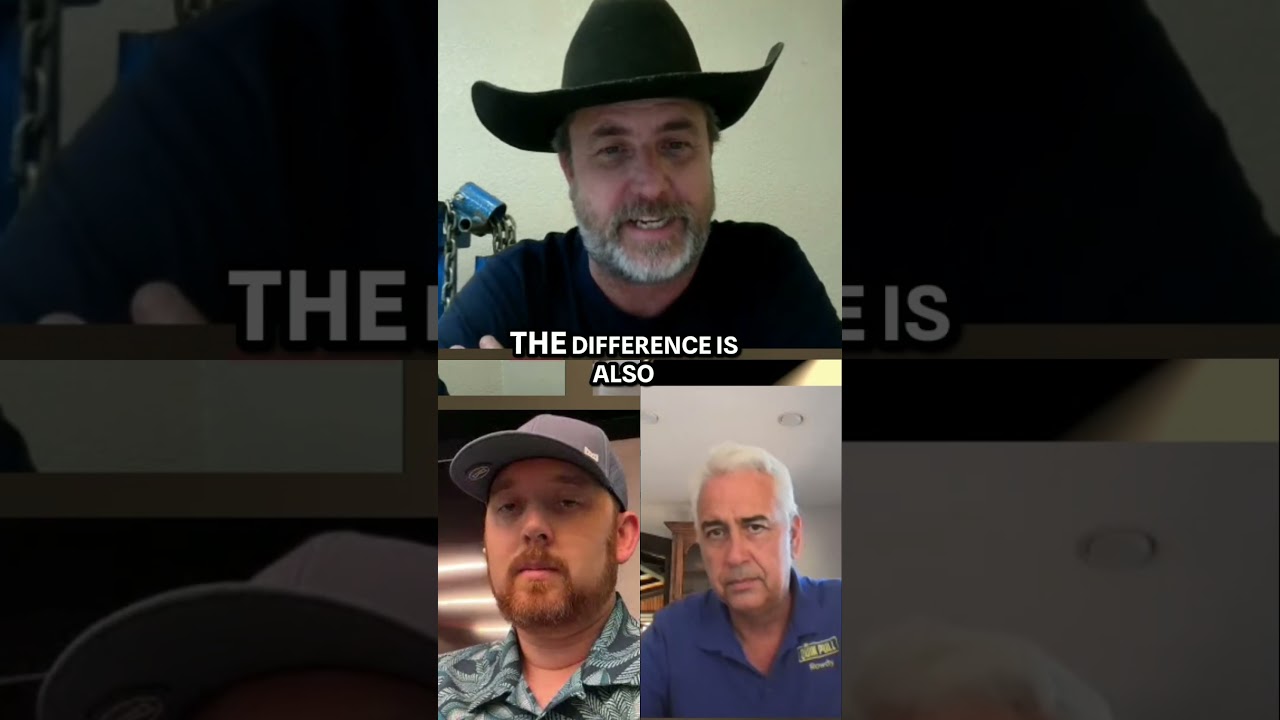
Sasha from Lion Fencing, Sean King, and Jim from Lock and Ox join Brian to break down CMM's newest fully automated routing machine, the real injustice happening in fence material distribution, and Lock and Ox's Venus — a low energy brushless DC motorized pedestrian gate opener that installs in 20 minutes and needs no external safety devices. #GateOperators #FenceIndustry #FenceDistribution 12-11-2024
Topics Discussed
Chapters & Key Moments
Full Transcript
(11,635 words)Hey,
Hey.
All right. All right. What's up? What's up? What's happening everybody? Hey, what is up with you in a box? Yeah. What do you Yeah, you were in a box on the intro, but welcome. Oh, I know. Oh, yeah. Oh, I don't Brooks made that one today. I didn't even That was the first time I saw it. This This podcast is taking a life of its own. I I'd say it's almost like I'm just a guest on this thing now. We all It's taking a life of its own. So, we have two guests, Sasha and uh Sean with Mr. Router. Yes, sir. Mr. Router. Mr. Router. Is that Is that going to be his new nickname from now on? Mr. Router. I think we just officially coined him as Mr. Router in industry tonight. He went down. That's better than the stuff we normally call him. Absolutely. And look at Sasha is still still at the fence. Yeah. That's You know that all your friends left and went back home, right? Yep. I've told them before they're charging you by the day for that expo hall. He's got to get out. There's a story in our booth. It's still back there behind them. See it back there? Mr. Defense is still there. Hey Sean, do you remember that blue all that blue? I What did you I don't know what that stuff was for. Some of your display was like uh it was powder coated blue. Some pieces of metal was like 10 12 feet long. Yeah. What happened to it? It's now been modified. It's been bolted to one of our trailers. That's how we haul our gates now. I I think I got some pictures. I'll post. It's like the back of our It's kind of like, you know, the the how the the glass companies haul their stuff with padding on it. It's now one of those. So, our fence display is now famous in Las Vegas to around Las Vegas gates. That's got a 30 32 foot gate sitting against it right now. Yeah. Good job. So, what's going on, man? I heard you're tearing up some uh CMM machines. Uh, yeah. So, I think uh last night at like 9:00 at night, so this was not even during normal operating hours, so nobody saw what was going down. My brother in there, Top Secret Mission, we learned that um so an 8 by8 vinyl fence post, you ever seen one? It doesn't fit in the router very well. Like, no. So, so but we had mission. We had to get this job done today. We had a home. We had a consumer that requested 8 inch by 8 inch post. I didn't know they make them, but they did. But listen, they wanted these posts so big because they went over top of 5 in steel round schedule 40 full-way pipe filled with concrete, six feet deep, six feet out of ground, vinyl post over that. They didn't want the fence to on six foot centers. So, I'm thinking this is easy. It doesn't fit the the It fits in the bay bar. You got to bring it in the rear end. You can't go from the front end, right? And the router head hits it. So, we had to take the whole router apart like lift the whole mechanism up like temporarily. There was some duct tape involved and some things to hold it like mission accomplished. The job is finished today. They love it. I'll wait. I'll get a live video here soon um to share with everybody. What a monster fence. five to six foot on centers, eight by eight posts over steel. But I can tell everyone out there right now that's wondering, just wondering about buying a CMM. I wonder if it'll route an 8 by8 post. I know it will. It did it, man. Is that true? Yeah. So, are your are your machines designed for 8 by8? What what's the max normally? But what's the max? What do you What does it normally What is the biggest it normally handles? Six. Sevens is a is the biggest I've seen. I mean, it it six is, you know, pretty standard, but I've never seen eights, man. I don't know, man. I used I just I like top gun, but like inverted. We were inverted. You got a picture? It's Yeah, it's it's a That's awesome. I refuse to get the router. I still use a a chisel that I I
Heat up and I I use a hammer and a chisel and I make all my own my own holes for the rails. You probably still together. Yeah. So, I've only done one vinyl job out. Yeah. And Oh, that makes sense. Okay, that makes a lot of sense. Yeah, the chisel the chisel technique. Yeah, the rails the rails are a little loose. Hey, actually, you know, I you'd be amazed how many people out there don't know what we're talking about and about the routers and have never seen a routing machine, don't even understand how that works. A lot of us, including myself at Las Vegas Fence, we just call up uh our distributors, local distributors, and say, "Hey, I want to get uh I want to get some posts are already routed with the holes and and for the rails." Uh Sean, tell us what's going on. So, this is our this is our newest creation. So, this one, it it uh it you'll see right now. So, it takes the material from a cart. It suction cups the material over to a conveyor system. The conveyor shoots it into the machine for you. it'll route it. So, right now it's routing it and then it will take it to get stacked here in a second and then it will itself so that it's ready to load. Um, look at that. That's amazing. Whoa. What was that? What did it Did it just flip it? Automatically flipped it. It flipped it. Yep. So, those are routers and flippers. So, it can do all four sides if it has to. If this machine will do 8 in post, I'm buying one tomorrow. that those are not eights. But yeah, but yeah. So here here it's coming off. Yep. And now it's going to suction cup them over and stack them. Wow. I love the cards. We we just came out with this um probably in the last two months and we've already sold four of them. So we we're ending the year really strong. Really? Are these things like4 million dollars? What? I mean, what kind of money we talking about for that? Yeah. So, so these are like in the two two to 250 range. Yep. I have a figure. Yep. Wow. Good guess. Good guess on that. Good guess, man. You sound like a man that's bought some equipment in your life. Well, I haven't bought a few machines before. I'm just referencing all the machines I've already purchased. They don't do half of this. A third of this. A quarter of it. Look, look what Evan said. Slicker than a snot on a doornob. And you got that right. Evan, you're the man. Yeah, remind me not to touch no doorork knobs when I'm visiting him story. Take some hand sanitizer. So, Sean, give us an overview. What's going on in the episode? This episode? This episode, we're going to talk about something I know very little about. Like, when someone asks me about automating gates, I'm like, "Oh, yeah, you can automate a gate." Well, what about a walk gate? What? No, you can't have walk gates automated. Could be nowhere near an automated gate. You got to be way over there because people might get hurt and crushed and Yep. But we've been told that tonight. Well, I think we've been told because we we live in this world of of vehicle gates and and fence and you know, so when someone says, "Hey, I want to put an operator on a pedestrian gate." We normally go, "Well, you can't do that." Because we just been told you can't do that. It's just not possible. You you can't operator the operators aren't built for that. And um I found it really interesting that you know the more and more I dug into it myself that uh there's a difference between normal normal gate operators that we would use for vehicles and low energy gate operators and things like that. So um or ADA compliant gate I mean it makes a lot of sense when you when you walked it through with me I'm like oh yeah the automatic doors at the hospitals and uh you know supermarkets. Yeah
Pedestrian gates is we will be we'll be talking about that um in the episode for sure. Um, and then we're going to be getting into uh distributorship models and how that's changing and uh what's been going on in the industry um even in the last couple years. And we got Sasha here, someone who's been on um pretty much every side of it you could imagine and and is still thick and deep in the heat of it. So um we're gonna be kind of still stuck at the fence show. He can't get out. I'm Where is everyone? I'm still here. Yeah. Yeah. Yeah. So that's gonna be kind of cool. So we're going to discuss that. Um it's going to be a jam-packed episode. We got a special guest coming on, uh, Jim from Lockinox, which is to discuss one of their new units that they got that, uh, is, I guess, is just killing the market out there in Europe and is starting to get over in the US. So, that'll be exciting. Um, other than that, man, um, I think we should just start, uh, get this thing going. There's just, uh, there's one thing that I think everybody always wants to know, though. Brian, [singing] I do better than that, man. this is all you right now. I can tell you right now, 100% this is all you. Look at me. Holy cow. Look at me. I can't read that. My eyes aren't that good. But look at me get all excited when I see that chain link fence. I do love chain link fence. Uh Jason McMillan says, "Has anyone ran into uh this on a spec for temp fence?" Oh, this might even as well. Um is it the normal um do build it out on stands instead of panels? Um, is it normal to build it out on stands instead of panels? Yeah. So, I think I think Brian, if I can answer this one just because you know we do temp fencing. I think the old school adage would you would drive posts in the ground and there's two style. was temp fencing like you know being a chain link guy where they'd use you know 2 and 1/2 gauge 2 in or sorry 11 and 1/2 gauge 2 in and I just run it and it's temporary and then the panels came along and they still would drive the post in the ground clamp them but today everybody's pretty much moved to the stands. So it's, you know, you put the stands on the ground. There's weights. We have weights that we sell as well or sandbags and it's very trans like you can just move it around. So yes, these days more more than not everybody's sort of moved towards stands. Yeah. I'm going to be the I'm gonna be the rebel here because I don't do as much chain link as either one of you. And we do some temp fence. We don't drive post and we don't use stands anymore. No weights. Okay. All we do is we do a weave. So 15 degrees. I tell I tell the consumer they got buy 10 10% more fence. We go in two feet out two feet in two feet. Out two feet in two feet. Out two feet. You can't push the fence over. It's unbelievable how strong it is. No stands, no weight. We're not hauling that [ __ ] out there. No replacing sandbags. No wind can blow it over. It's kind of crazy, but uh that was just us trying. I didn't have bags, right? And I like, well, geometry I could do do this and it freaking worked. And now we haven't looked back. Yeah. And I agree. We we stagger them sometimes. We'll even uh out here we get wind and we do a lot of uh temporary panels out here. And uh we'll actually sometimes go every so often and just take a panel completely at 90 degrees or um you know, and sometimes that takes less panels than the staggering. But um I I what Sasha was saying too was uh in the beginning, yeah, we drove we drove all the post in the ground and a lot of times it was Tpost or whatever we could anything we could get, right? One and 58, whatever it was. We'd drive them in and then we just stretch the wire and and no t no tension wire or nothing. And then it went to um driving the posts, but every panel, do you remember when the panels had the round uh it was like two and three? It was like two and three welded to the end of every panel and those would overlap and you'd drive a post through those. Oh yeah. and that would drive straight through and that was actually pretty secure if you remember that. Then it
Went to temporary panels uh stands where it has the you know the pieces of one inch or whatever it happens to be coming up and and then you use a clamp you know on each one. So it's it's it's actually evolved more than people think. Now we've got and then we had in here we had people that were tripping and suing. A couple people got sued locally um because of the stands with the the you know so everybody went to like uh colored sandbags and then we went from colored sandbags to where now they've got stands where you've got those heavy uh kind of like flat flat uh flanges weighted flanges that go over the stands. So it's amazing how much temporary panels have changed in the last 10 years. Yeah. So that's a that's an interesting question. So to answer question Yeah. Yeah. Great, great question. Um, let's see what the next one is here. Susan, Susan, by the way, if anybody's watching this, we don't get to see these questions before they come out. Susan pulls these from U Fence Industry Only Group, which is uh one of our groups on Facebook. So, if you're not a member of fence industry only on Facebook, go to Facebook, type in fence industry only, and you'll find it. Sean, you have another great group over there, uh, fence tool, what is it? Tips, tools, tricks. What's I I never professional professional pro fence tips, tools, and tricks. Say that. Say that 10 times. It changes the name seashellore. Yeah. You know, we call it the fence group. Hey, this one looks like it's right up in my wheelhouse, man. I geek out on some fence numbers. All right. Efficiency ratings and all those type of things. Dad's asked a question. How how are you guys accurately tracking and figuring out your job costs? Is it paper? Is it Excel sheets? U QuickBooks? Looking to try something new this year? We'll have someone in the office one day a week. Want to try that? Well, one day a week is gonna be tough to track all that, but depends on your volume. Maybe you're only doing a couple fences a week. Maybe it won't be that bad. Pro fence tips, tools, and tricks. Thank you, Billy Grove, for that one. Um, here's what I we we use Excel and we use QuickBooks. So, all of the data goes in QuickBooks as far as the revenue of the project and all the manh hours and exact costs of uh labor. Um, and our retirement are into QuickBooks. So, we can pull out a profit profit and loss report for the job, but we also track an efficiency rating outside of QuickBooks in Excel. We're looking at things like um uh sections per manh hour, the efficiency rating of the crew, the efficiency rating of the sales team member, like how accurately did they sell the job price-wise? Do they sell it for enough or not enough? And give them a grade and then give our team a grade. So, we use Excel and QuickBooks. Wow. Wait, so you guys are tracking things? That's uh Yeah, we look like NASA over here. I think we do less building fence and there's more like we spend more time looking at we just put in more overachievers, man. Jesus. You don't get an award for tracking stuff, you know? So, we actually talked about today I had a meeting today about increasing what we're tracking even more. Like taking the budget, you see the big budget that we have. We're going to change that into the what's called the fence matrix. Now we're going to track everything from lead to appointment ratio, capture ratios, sections per manh hour, revenue per manh hour equating to advertise job production per day. So now you can start tweaking all these different pieces in your business. It's not about just driving revenue or driving net profit, but are you maximizing your resources and not don't have too many installers or not enough installers or too many sales or too many leads and not enough leads. too low of jobs where the dollar value is too low that even if they knock it out of the park, you only do a $3,000 job that day. Your other jobs are too big and you don't have the capacity to come down. So all of these things we're going to start adding into the budget. So now you're not tracking just the dollars. There's a whole lot of knobs to be turned to make your fence business profitable. That's you do a lot of consulting. So, um, do you think, you know, the tracking, I mean, I love track, obviously, we all love the numbers of of
Knowing, you know, what something costs, but do you think the tracking, um, is more beneficial because you're just trying to get, you know, it helps you get the price down as low as you can and still be competitive, or is it just to help you be more efficient? What do you think? I think a lot of it gives you confidence in the pricing. So, you when you go to war with the price, you're not like, "Oh, I better sharp my pistol, lower my price, and go work for free." When you when when you give a price and you know your numbers and you're confident, this is what it takes for Sean Keane to build your fence. Right, wrong, Sasha might beat me, Mr. Router might beat me, I don't know, but this is what it takes for me to build your fence. And when you get push back from the consumer, oh, so and so's cheaper. We sharp sharpen our pencil, so call it. And we just start giving away profit and we work for free. And we do this over and over and over and we wonder why we're stressed. We can't grow. We have no cash flow. It all sucks is because we didn't know what to price to begin with. We were literally guessing. So imagine driving to Las Vegas from Indiana and I have a road map. I know I have Google Maps tells me how to get there. Can I get to Las Vegas without Google Maps? Yeah, but I may end up in New York first in Florida before some guy points me go that way, right? Like y So I think it's not about getting the price as low as possible. About being confident with what you're doing so you have less stress and perform better. Maybe that makes I had a question. Yes, sir. One quick question. Do you go over that stuff anywhere? Do you like Do you go over it in youries and all that? Yeah. All All of this is what we teach and preach in the academy. The academy is what this is. People think the academy is like fence installation. That's almost like a side gig if anything. We focus on this part of the puzzle because you can build a great fence and you could do it super fast and go broke even faster. Really? Okay. So, in the academy, we focus on we have our own Excel sheet for job analysis, one for sales pipeline, one for fence matrix, like all that stuff is built in there to help navigate all of this. So, you're not on your own trying to figure out what do I track and how do I track it and how do I know it's actually accurate. Yeah. So, if you want if you want to learn how to go straight to Las Vegas from Indiana, Sean is your man. If you want to stop by and maybe see Niagara Falls, go to New York or something like that, give me all Yeah, Brian's your man. I'll teach you how to I'll teach you how to have fun on the way too. Hey, I know this question. This Brian T. Frederickson posted this one. Oh, nice. Then you can't answer the question. I can't. This is gonna be a Sasha and Mr. Rounder question because I I obvious answer this question, too. So, take it away. Do you want to do it, Sean, or you want Go for it. You You go ahead, buddy. You go first. Both of you. All right. So, the question is, you have one day to spend 100K on your business. What do you spend it on? One day. I'd say an F-150 Raptor. Maybe that's gone that fast. Um, no. That's a really good question. I know. Sean, you want to answer that? You're smarter than me. Me? So, like I mean for me it'd be, you know, obviously we have to buy all of our We have to buy all of our Yeah. Right. We have to buy all of our material. So, I mean, I would buy material and I'd buy a a badass guy who can weld and put together a machine as fast as possible. So, I would buy a ton of steel and aluminum and then I'd buy I'd spend the money to to hire a really good employee who can weld it together and put it together for me and then I'll go sell them. So, that's what I'd do. And I think for me being a product sort of based company, you know, we definitely look at maybe product development, like finding a product that's maybe a little unique because people don't realize how much money goes into product development. Um to just launch a new product or or or a product that's new to our company. Um but I'd also have a look at our marketing, you know, strategy as well. I
Think that the two big things for me would be the marketing side and you know product development. I guess for me it's like is this 100 grand a free money? I don't have to pay it back. Because if someone's giving me a 100 grand to spend free money, I'm not going to spend it on inventory. Yeah. Exactly. If it's free money, it's a different story. But so you might take a bigger risk. What would you what would you spend it on if you knew that you're going to pay it back and you got to try something that you would not normally use your hard-earned money for to try? Take a risk on something, right? There's a lot of ways to to advance our business and we see these opportunities that look they're they can be very risky, but they can also be very lucrative to try something, innovate something, product development, right? And and try something new. If I knew that I didn't have to pay it back, I would definitely be spend this money on education or innovation. one of those two uh to take a chance that maybe that'll walk away and turn this 100 grand into a million. Yep. Yeah. But if I if I were to if I had to pay it back is a cash flow thing. Where's my cash pinch at? Right. It could be funding some equipment to further my production. That's that's where a pinch point is. Buying a router. Buying a router. Do 8 inch posts. Uh now that I know that um or it could be a piece of equipment. I had a conversation with a guy today about focusing your time and effort on the on the constraint in your business. So we oftentimes look at all the problems. It could be my guys don't build fast enough. I need better welders. I need more sales. Whatever it is, but if you really look look at it and say which one is the biggest constraint and put all of your energy in that one constraint, smash it. And then you step back where's my next boom. Laser focus. That 100 grand can help you laser focus on wherever the constraint is. I think we get really distracted. We focus on five problems and we solve five problems half ass. If we went after one problem and smash it, that's no longer a problem. It's it's it's in the back 40. Who's next? Right. So, yeah. I think I I would just um I would I would build the biggest women of FWA booth at the next Ben show, you know, and then take them all out shopping. I don't know. Oh, what a man. I love it. No, no. I I I agree with you though, Sean. If uh if it was 100 grand and I just had to spend it on something and you did it wasn't a loan, you don't have to pay it back. You had no real accountability for it, then um and it wasn't needed for something, you know, drastically. I would uh I would take a risk. I would probably take I'm always trying to start I'd try to my wife running. That's that's one toe wonder over there running back and forth. I would take one of the crazy ideas that I've got going at any given moment and I would spend $100,000 on marketing just to get it off the ground. That's it. You know what I And I would just I would buy AdWords and marketing from here to the east coast all the way to Europe and uh just go for it and see what happened, you know. Yeah, great question though. Uh that was good. I'm not saying that just because I asked it, but again everybody, that was on uh Fence Industry Only Group on uh Facebook. So um we do we do want to uh kind of get into uh distributorship stuff. Sasha, how's it how's it been going on you, man? I mean, you're uh you're a manufacturer. used to work for a distributor. Uh in case anybody uh why don't you recap your in case anybody that's just watching this for the first time didn't get to watch part two. Um recap a little bit about yourself and um about the industry. Yeah. So I originally I come from the install side. Uh fell into fencing in Australia on install and then when we moved to the states probably did I did that for I think around seven years and then when we moved to the states I fell into the supply side and I worked for the probably the second or third largest supplier in the country. Um, and then as as the industry sort of as it all happened and I ended up uh joining
Forces with another Aussie and we ended up going off on our own into a direct direct sale model under lime fencing and steel supply and I feel like I I don't really understand a soap box right I'm not that from the 1920 whenever soap box were developed but I feel like these podcasts are a bit of my soapbox to keep beating this one message out. And it's not as it's not as pretty as everyone says it is and everyone's got their own opinion, but I've been in the supply side for a massive corporation, so I know the inside workings and I feel the message is getting a little bit uh I don't know, watered down or misinterpreted. So, you know, I feel like the truth needs to come out and from my perspective, if we really care about the industry, it's about servicing everyone. And I think, yeah, we're talking about it, but I want to ask you this question, Brian. I think, you know, this is going off from that episode with the three of us on there was I feel somewhere maybe got a little bit misinterpreted um by the fact that we're talking about blanketing, you know, pricing for everyone. And no, that's not what we're saying. was saying, and you correct me if I'm wrong, Brian, because I feel like that episode we were talking about the misinjustices that fencing people are getting. And it I feel like it's true. The reason, and I'll be honest, I'll get on my soap box. I didn't leave big corporate America because it was doing what was right to um to fence installers. And don't get me wrong, not everybody's doing it. It's it's not a beat up moment. It's an education moment, but it's facts. So, we got pushed to the side and we're like, "Okay, I'm I'm an expense installing guy. Love fencing. The owner is as well." Like, we just want to service the industry. We don't want We don't It's not about um hey, I'm going to give everyone the same price, right? It's about servicing everyone to the grade they're all at. It's like if I'm the little guy, why can't I buy fence? And I think the real eye opener for me um was I felt like we weren't servicing fence people at all. Like we were putting people in categories and I don't feel that's our industry. I don't feel that's how do I be part of a community and service it. If I'm telling people, hey, you just started your business in America, which I feels like the greatest country on earth to start something, but I'm not going to service you. You got to go to Again, don't misinterpret what I'm saying out there. You're sending them to Home Depot and Lowe's and and Home Depot have its place. We all buy things. Not knocking that. But if you're a fencing person, why aren't you buying from distribution people in fencing? Yeah, you should be coming to Sasha and Lion and getting a great service and fair pricing. Now, if you're Sean King and you've got a small company and Sean, what are we calling Shan? Router Sean, Yeah, they're going to get different prices. service is going to be the same, but Sean King, so yes, he's going to get fair pricing. I feel like that's where we left off. I feel that there's maybe a misinterpretation that is a blanket price for everyone. that's not reality. I see what I know. I see I see what you're saying. Yeah. I mean, I don't think it's ever going to be a case where everybody gets the same price, and it probably shouldn't be. I mean, if you you should outgrow the price level you're at as your There should be a volume price difference. That's it. Not says, you know, well, he he I'm gonna make him a better player in the market than you. No, if I buy the same volume, I got the same price as the guy that bought that volume. Hey, let's bring uh let's bring Jim on, by the way, even though I know we're not really on that, but I know Jim's in the background and I don't want to lose him. Jim from Lockinox. How are you, man? Hey, I'm doing spectacular. Hope you guys are. So, uh Jim's from Lockinox, uh USA, uh USA side. So, uh, all obviously you're in the USA, so we're going to circle back to you, but I want to bring you on because I know you were in the green room there and I don't want to leave you in there too long. Uh, I know we've got
Drinks and stuff for you guys back. I was that was an off on the East Coast. I know. I know. But Sasha, and maybe you can chime in if you want because I mean, you also have experience on the manufacturer side of it and stuff as well. And we'll get into some of your background, but Sasha, so to, you know, to to kind of go back to what you were talking about, I agree. Um it can never be level pricing out there across the board for everybody because I mean you got guys are going to buy a truckload and you got guys that are just buying you know per job. So I mean the difference between buying selling a job where you're ordering 10 tension bands and two tension bars and and uh you know a roll of wire 50 ft and stuff like that. Um but I think what happens what happens if you become uh Sha Mr. Router Shawn and Mr. King Sha is trying to build his business and Mr. out of Sean has gotten so big that he circumnavigates lion and goes direct. Can I hate him for that? So I feel like suppliers need to understand and I'm a supplier. So I'm talking from I only make money by selling fence, right? But if if there's a bigger company that grows and goes direct, how can I be mad at that? Right? That's just how it is. People as they grow, they get better buying power or they they're in that pos. But we should we should embrace that and be and be happy for companies that get to that point and we keep focusing. It's like this circle and I feel like we've we've cut the circle off and gone, "Oh, no, that's not right." Well, that's life and Yeah. Everybody should outrow where you're at. Yeah. You should have the opportunity to outrow where you're at. You could start off with uh you know working out of the back of your truck with a wheelbarrow and buying from Home Depot and then maybe you start buying from a local fence company that actually sells materials and then you start buying from a distributor and then you get to the point where you're buying truckloads but we need to encourage and so you can't ever be mad when necessarily lose a customer. You can be mad if you lose a customer to your competitor, but I don't think you can be upset when you lose a customer to um you know them moving up and start buying by the truckload and buying directly from manufacturers because that's the goal because that person's going to have children and uncles or nephews that are going to he's going to teach those guys how to build fence and he's not going to want to work for his dad and he's going to go start his own fence company and he's have to start off just like you did. So I think um the problem and the injustice that we were mentioning and we were talking about is not um that you know it's not that they're they're getting you know a different price that's that much higher is we had we had situations going on in in in this country anyway. It doesn't happen in a lot of countries where we we go through all this effort and even some of the manufacturers to get their products speced out with um architects and engineers and then it gets on a set of blueprints. Now this general contractor that's actually bidding this project out calls up and says I want this manufacturer's product you know being used. So then you call that manufacturer. Manufacturer. Yep. You call that manufacturer and they say, "We can't sell to you. You got to call um XYZ." You call XYZ and now you're paying, we'll say you want to call it iron. I we'll say iron happens to be it. And you're going to call and now your your price on these panels is $3 $400 a panel, but yet your competitor in your area is paying $150 a panel, $200 a panel. So the price difference is not it's not because of the quantity you're buying. It's because of the access to the materials, the access to the actual being able to bid them competitively because maybe that manufacturer has a deal with one guy in that town or two guys in that town and that and that happens to be your competitor, one of the installers. So now you as a manufact or as an installer don't even have a chance of getting the job or you have to bid it to the point where you're making almost nothing and you're not even marking the materials up. So that's the injustice that's been happening, you know, over for for decades in our in our industry. And I think that's what we've been, you know, what we've been trying to fix. And I think it's getting fixed a little bit. But unfortunately, what's taking um what what's causing causing, you know, what we're doing to fix it is
We're bringing in the European markets and the Asian markets. And there's new, you know, more direct sale models happening. And it's unfortunate that that has is what it's taken to fix it because we already had this massive network of distributors, you know, with the distribution channels and everything set up to do it. But I think what we were talking about the injustice. Um yeah, I mean that that's definitely what we're not pricing has nothing really to do with pricing. It has access and service to the fence company. Fence fence companies were treated like dogs. I mean literally if you called up back I'm maybe it's changing a little bit now and I see it. But if you were a fence company and you called up even some of your larger distributors at some point, I'm not saying it's the same now and I'm not saying it happens to everybody in different areas, different whatever it happens to be. But if you called up and said you were a box store or you were a general contractor or you're a government agency, no problem. Let me sign you up at field. This is what it feels like to the industry. Well, let me not only let me sign you up, let me get you the best tier level pricing I can because we want that. We want to get your government contract. We want to get your box store. We want to sell to Lowe's. We want to sell to Home Depot. And then if a fence company calls up, you're like, "Hey, I'm a I'm Las Vegas fence." Well, hold on a second. Um, let me we need we need is make sure you have this license in that area and fill out this application and then um we'll get back to you if we can set up an account and then by the way by the way we're going to put you on the shittiest tier level we have. Yeah. And you know what pisses me off? Like it's not about price. What pisses me off is it's like why do I need to give you a credit up when you're C, right? Yeah. I have a hard time with that. Yeah. You know what I mean? You just want the product. Yeah. I'm going to pay you. And I'm Oh, no. Sorry. You need to fill me. Like, yeah. The guy wants to give you money. I'll be Come over to the line. We'll give you And you know what? If if you're selling to if you can if you're selling to box stores, you know, and how come we can look at um you know, how come we can look at a Lowe's or a Home Depot and we can look at that as a massive customer, but we can't look at the fence industry as a massive customer? And if we're if I'm going to start a company myself um and you know, which I I sell materials. I've all, you know, for decades of sold materials and my core customers have always been fence companies and those are the ones that I those are the ones I treat the best to and and how you know why wouldn't I treat the fence industry as a big customer and why wouldn't the fence companies get the best tier level right off the bat and everybody else trying to get in the industry should be the worst but if you can go to Lowe's or you can go to Home Depot and buy wire cheaper from them than you can get delivered to you from the same uh fence distributors and that's the problem. That's the injustice I was talking about. So, not um that you know everybody should get the same price, but come on. Uh you know, uh there should be a difference enough to where you could still competitively bid it and still have a chance at getting the job, a chance at growing your company because whether you you know, it costs the same for us to set our companies up for a big one or a small one. So, it's uh you should have the opportunity to grow your business. So, I guess yeah, I'm glad we uh you know, I'm glad we went and you know, kind of recap some of that if that's what if that's the question you were getting at. Definitely not it shouldn't be so dramatic and so drastic that these small companies don't even have a chance of bidding on a job if it gets specked out by an architect. Well, if I'm asking a fencing person off the bat trying to buy product from me, a supplier, where's your credit app? And all they want to do is buy two fence posts, right? Who cares what it is? and they just want to pay me there and then why why can't I just service them, So, I feel like while I feel like it's changing, I agree with you, Brian, to a point, but that's really what's been happening and there's plenty of evidence of it and that that's what need that's what I'm passionate about and I feel like no one's talking about price. We're talking about just service the industry. What's
Fair is fair and what's not is not. Well, Sash, we we stopped a decade or two ago judging companies based off of their products and their services. And we started judging them based off of who they sell their products to. And that was that was the downfall. And it was short-term gains for PE for people that controlled the industry, but long-term it was it's what's going to actually [ __ ] our industry. And it's going to bring in uh it's going to bring in all of the people to the industry that they didn't want there in the first place. So, it's it's ironic. Um Jim, hate to put you under the fire right here. What what are your thoughts on this? Well, I tell you um to some extent, you know, my my history goes back and as a you know, as a manufacturer to the the a fence world um number of years back, some of you may know that and we were kind of victims of our own success uh and and victims of that mentality of I want to sell to everybody uh but at the same time I can't. It's really difficult to do that. Um, you know, I had a guy with a pickup truck. They're great. They're wonderful. But don't come to me and tell me I'm gonna sell more than anybody else out there and expect me to believe you without any evidence to uh to support that. So, I'm not going to give you my best pricing. You've not sold one thing for me. Um, you know, show me you can do it and then we'll talk. You I had uh set up three customer. Well, I set up two customers today and had to have a conversation with one. Uh, well, I had one that had a fantastic year this year and we're moving them to a better tier. great. You know, uh had another guy and I think just being really upfront and transparent about this, uh they understand. This is a brand new customer. You know, I asked them, "Hey, what do you what do you expect you're going to do this year?" And they were pretty straight up and honest with me. And I said, "Okay, great. We're going to give you the best we can, but I'm not going to give you the best of a guy who's buying a half million dollars worth of product from me a year." So, yeah, just being transparent is is huge. Um, but yeah, it's it's it's a problem throughout the industry. It takes a lot of juggling, a lot lot of tight rope walking to make sure we're doing right by ourselves and doing right by those who are trying to buy from us. Yeah. Yeah. And I think that uh it's it's evolving. I think this last uh even the last few years and and and so on. So I think it's it's opening up and and as much as I say that about you know what's going on with the industry about people not being able to purchase, I see it changing. I see you know I see our um our distributors and I see our manufacturers. I see everybody's it's getting less and less political about who you're selling to and more and more people are saying, "Hey, here's the deal. Bottom line is whether you're a manufacturer, a distributor, or an installer, or whatever you are, we're all in the business of selling fence or hardware or gates or whatever it is." And uh it we're going to sell and people are starting to uh just say it's happening. There's nothing we can do about it. We're just going to and I think in the end, we're going to have a stronger industry. And I I like to see I like seeing the direction it's going in right now. So, it's uh it's been a lot of fun. And I know Sasha, you've been a huge part of it. Uh Jim, our relationship um goes back, but not not as far as mine with Sasha and them. So, um super excited about that. But um I do want to get over to uh these motorized pedestrian gates. And let's talk gates. That's the reason I brought gates out. Like what's happening? Is that a thing? It is a thing. Gates. Look, I don't even know if that's a sensor thing. Is it allowed to have automated pedestrian gates? Talk about it. Yeah. So, I mean, uh, by the way, you're going to be able to get these things at fence materials.com that we're going to be talking about here, um, shortly after this. So, reach out to on that. But this, uh, explain to us this Venus, uh, this thing is just hitting the market hard. I mean, it's, uh, I I I I learned a bunch about this and I'm super excited. Tell us about this and specifically the low energy aspect of it. Okay. Yeah. So, this is, uh, yeah, so I'm with Lockinox. People may know us
Uh, as, you know, we're a Belgian manufacturer of really high-end, heavyduty gate closers, mostly hydraulic gate closers. uh this is our first foray into uh automated gates. So, and I think we've we took our time and we kind of started this with fits and starts. We we uh showed this at Fence Tech this past year and then told every had a lot of excitement and then told everybody, "Nope, you can't get it yet." We were waiting on UL certification. You were one of those guys, huh? Yeah. So, I kind of took the wind out of everybody's sales and um so around July, we got every all of our certifications were taken care of and ready to go. But yeah, so the low energy uh brushless DC motor on on our Venus uh which is what this is called is is really kind of the beating heart of this product. Um it allows this to to really you don't have to have any external safety devices in order for this to be a safely operated uh uh device. Uh if it encounters uh an obstruction opening or closing uh it just reverses itself and you can set that uh when you install it. The installation of this product is really, really unique. It's done on an app and uh when you open the app, um it just probably can't see it here, but it just walks you through every aspect of it. It can you get the the device attached to the gate with the correct arm. Uh and your correct arm comes with it. You just decide uh whether you want an articulated arm, a straight arm, or what have you. Same price depending on, you know, whichever arm you want. And that's depending on if you have an offset gate, you want to open 90 degrees, 180 degrees, so on. Um, do we have any pictures of this? I'm trying to visualize. You just had one up there just a second ago, Brian. On a gate, we'll go and um Susan will pop one up in a minute um of showing it on a gate, the Venus one. So, um, yeah. So, really all you Yeah, you get it on the gate. You get 110 volts to it. Um, you also have three uh 24volt outputs off of it. If you need to control something else, be it a an electric strike, a mag lock, a light, anything else you want to do on that gate, you can get power off the device without having to have any external uh power supply. Uh you also have three uh programmable inputs. So, if you want to program this, again, this is new to me, but these these gate automation guys, they understand this. If you want to work it on a keypad, a proximity sensor, a card reader, a touchpad, anything like that, you can you can program it to do that. But, um, but once you get it, you open the app, it communicates by Wi-Fi with, uh, with the Venus. It asks you a series of questions. How wide is the gate? It can handle a gate up to four and a half feet wide, up to 220 pounds. So, pretty heavy duty uh, pedestrian gates. And uh and it just walks you through every aspect of what you want it to do. How fast do you want it to open? How long do you want it to stay open? Uh what amount of force do you want it to open with in case you're dealing with wind loads or whatever the case may be? Why can't we make all gate operator control with an app like this? This sounds like a dream. Well, and the low energy. I mean, I guess let's get back into that for a second because I think that's what makes this thing um possible when you're when you don't when you don't have all the extra photo eyes and things like that. So, um, this is pretty slick. I mean, it's pretty small. Look at that. It just mounts on the side of the the post and then attaches to the Yeah, if anybody's familiar with our Verticlo, which is probably our second biggest uh uh retrofit gate closer. It's roughly the same footprint as the Verticlo. It's about 16 inches tall, uh, about three and a half inches wide. Uh, weighs about 18 pounds total. And I mean, I've got one right here. So, you can see not that. So, what what makes it possible? So, you notice you don't see a bunch of photo eyes. You don't see a bunch of safety stuff on this thing other than just that unit. Is there something else that's added? Is there I mean, is there a loop in the ground that weighted loop that people are standing on? What's going on? I mean, how's this thing not how are we allowed to do this? You know what I mean? We've been talking have all these other devices, right? Yeah. Because the the the motor, the brushless motor and all the electronics inside of it, and again, I'm a sales guy. I don't understand all this stuff.
But when it encounters any kind of obstruction and again when you're setting up in the app, you can you can program it as to how much force you want it to encounter before it reverses. And that becomes the safe the key safety uh uh aspect of of the Venus. And so once you're done with all this, it walk it does a few cycles just to ask, hey, are you happy with what this is doing? And when you say yes, you slide the cover back on it. it becomes a secure device at that point. Nobody can tamper with the Wi-Fi. Nobody can reprogram it and you walk away and it's done. So, it'll find it'll find it'll correct itself and find its close spot. Even if you uh if it's closing and you push it because obviously people get impatient. You get delivery guys, you get something like that, they're going to they're going to this thing could be going to close, they're going to force it the other direction. What happens when you do that? Absolutely nothing. It just goes back. It it'll go to the open position. If it encounters that obstruction or reversed uh either direction three times, it will just open. It will take itself to the full open or full close position. Uh and then at that point, if it stays in the full open position, you just tap the gate, it'll go and close when you're ready for it to. Oh my. And then, uh in case of a power outage, uh it just freewheels. You don't have to worry about being locked in or locked out. Yeah. So, uh Michael Brooks says, "What happened?" What was that again? I missed that one. wants to manually exit. Yeah. What happens? So, by manually exit, I'm assuming you mean you're going to turn the knob and and push the gate. As soon as the the the device uh detects the motion of you pushing, we call it push and go. Soon as it detects that, it takes over and opens up the gate. So, you can kick it. You said there's a mag lock though. If there's a mag lock, that's not going to happen. Correct. But now, once you you can program this with those inputs. So that let's say you uh uh disengage the mag lock from a keypad or a button. Okay. Or just like your handicap button or whatever that's on there. As soon as you do that and that mag lock releases. The the gate the the opener takes over and opens the gate. Nice. You did say if there's a power failure, it'll actually fall safe open. Is that what you said? It'll just fail safe to just freewheel. You can whatever you want. Yes. So then Michael's asking a question. How does this work with pools? Is this something that can be used with pools? You got a lot of code compliance things or some liability issues with pools. As far as pools go and and honestly I don't like to talk about pools a lot because you know the everything changes from municipality to municipality. However, what we are seeing in in Europe, which is where they they've been able to sell this all year in Europe, but with their CE certification, we've only been able to sell it for a few months here in the United States. Uh but if you have a a controlled access pool like in a club or something uh that would be a perfect application for this. Okay. So can you Jim can you ever switch this motor into manual mode either through the app or on a machine? Is there somewhere like let's say I don't know you got no cell who knows but can this machine ever get turned manually from any anywhere else outside of the app? I'm sorry. I'm not I don't know that I'm follow mechanically be turned into a manual gate or like shut off the uh shut off the unit basically and the gate works free. Yeah, you can just disengage the power if you that's more of a permanent thing. But if you are in a hurry and you want to open it faster than it is programmed to do, you just push it. It you're not going to hurt you're not going to damage the motor. It'll just go as fast as you want to push it. And then once it's in that full open position, that time passes that you programmed it, it'll close back up. So, what's a what's an ideal scenario for this? I would assume any ADA gate. Anywhere, anywhere where you got ADA gates. Um, a lot of commercial
Properties, things like this. Um, pools. OB, it depends on where you're at. You want to check with your local building departments if there's something spec in our case, the health department handles all the pool stuff. Um, so um Yeah. And is there a actually Michael just same question. So, is there a fail secure mode? If you wanted this, if power goes to have it lock closed, can you rig it so the mag lock stays activated? You would just you'd have to have a a mag lock. But, of course, with a mag lock, if you have a a power outage, the mag lock's not going to do you any good. You could have a um an electric strike. That would be a fail close option there. If you needed the the gate to stay locked in the case of a power power outage or or some other scenario, you could do it that way because the thing's not designed to actually um it needs a it needs some sort of latch system. So, um it's not designed to work without a latch. So, it does need a latch of positive stop because the unit won't really hold it perfectly in line. Not very well. Correct. I mean, it it will because when you set it up, it it tells you to open it to the full open position, close it to the full close position. So it it the unit knows where full open and full close is. However, having a keep, having a lock is gonna keep it where you want You're always going to have Yeah. I'm sorry. Work on a four and a half foot wide, six foot tall privacy gate. That's a wind load involved in that. Uh any issues with that? No. Again, uh because if you have a lock on it of some sort, it's going to stay closed. Oh, no. No. meant like during the open and close process and that's that's where you would um when you're programming it, you can adjust the amount of force that it closes and opens with to account for wind load. What do you think the average install time is on these that you've seen? Have you heard Have you heard any numbers back on that? You go out there, power is already stubbed up, excluding running power obviously because you don't know how long that's going to take. What do you think the average install time for a fence company or somebody that's doing this to install the actual unit itself? So, I I built a and I think some of you have seen the the video that I put in uh that I built a uh a tabletop demo of one of these. And again, I'm just a sales guy. I'm not a fence installer. Um um and I I actually from from zero from putting the the drilling template on there and and and starting from there, I had it installed in about 20 minutes wired up and ready to go. Wow. Wow. And that that includes opening the app. That all and I'm sure you could do it even faster with with some practice. That's fast enough. I don't know about you, Sean. I see some I see some upsells here. Huh. I see. So, the question is, is it work on solar? Because running power can be tricky. But if I can put a solar panel off of this thing for that low little low power usage, nah, we're getting somewhere. Well, you still got to have 110 to it. That that's the only thing. You have to have AC to it. Even inverters. You could probably get inverters. You could set up some batteries and an inverter and run this thing. Yeah, that makes it I'm trying to make it easier. Brian's going Amish. Yeah, you're going to limit your your usability. I mean, it it is good for continuous cycle. So, it can just run and run and run and run and run. Uh obviously, if you're charging batteries and converting that to 110 from 12 or 24, uh you're going to limit you're not going to get a whole lot of cycles out of it before you deplete that. Yeah. Okay. I think it's I think it's great though if you're out on a project and uh you know anything that's got ADA stuff and and and that's getting more and more prominent on these projects where you know even the general contractors and everybody else is asking us hey what what do I do now we can maybe we got something else to offer and why not throw it out there I mean if you think about it I mean I we're getting asked all the time we do stuff with panic hardwares and maybe you can put an electric uh panic bar on it to where this can work you know with an electric pan panic bar as well so um I'd be interested
Another neat thing about the the uh the electronics in this is that it can be as we update it just just like an electric vehicle as we make this better, we can make it better through software upgrades. And so when you log on to your app, when you install the product from new, it it puts the latest uh firmware into it right away. If you go out for a service call and there's firmware that's happened between now and then and now, uh it will upload that. When I was in Belgium back in March, big question we had for them was, can you put this on the inside on the non street side of the gate so it can't be tampered with? And they said, you know, we haven't really thought about that because in Europe, we don't tamper with stuff like that we do in America. And so the next the very next day, they had an option for that with the articulating arm. Now, you can only go 90° when you put it on the inside. But they had were able to do that programming upgrade just like that and it was ready to go and no issues. So, yeah, that that's the beauty of this is that we can we can make this a better product without touching it. Yeah. Yeah. Hey, Sean. Uh Sean, uh Mr. Fence Sean, hey, uh do you call it a closer or a closure, right? Do you ever closure? Let's see. I would say I How would you uh Yeah, closure. Yeah, I'm origally from the West Coast. I just been living in the Midwest with that accent. Closure. So, I've always called it C L O S U R E, I guess, right? Closure. And then, but you know, you know, the more and I always spell it wrong. It's closer. It's an operator. It is. Yeah. There you go. It's also different from us because everything we've ever done have been hydraulic closers. Now, we have something that opens a gate. Well, I mean, speaking of uh speaking of that, I mean, you guys are famous for I mean, if there's one product you're famous for in the US, it's the Mammoth hinge, right? Mammoth. Yeah. I mean, those are those are everywhere, especially on the closure. Yeah. Yeah. So, hey Jim, thanks for coming on, man. Uh Sean and Mr. Fence and Mr. Router, Sasha, you guys um taking this time away from uh your evenings and your family. I appreciate you guys coming on and hopefully everybody enjoyed the uh Hold on, hold on, hold on. I want to talk about our next episode next week. What's going on? We would love to hear about that. We're gonna have a Christmas party, but I am going to release the StreamYard link um in like two days and anybody who wants to come on and just talk to you, you have four to five minutes to come on and Brian, anything you want. She didn't make this [ __ ] up. She couldn't. Do I get to come back? I have a plan. We're gonna have fun. Oh my god, that's crazy. Everybody can you just copy the link, you put it into um an internet browser and like I will have access to your face. I will pop you up on screen and you can ask Sean and Brian anything you want. Can we do that? I bet what's gonna happen? She gonna forget. She gonna send me and Brian a bad link. everyone else is gonna be in the show but we're gonna be over in a different studio just waiting. It's gonna be like 15. be like Sasha at Vince show. It's gonna be It's gonna be Yeah. What's going on? So Sean, like if you have anything you want to ask them, here's your opportunity to come on and just give them the hardest time on planet Earth. Oh, that sounds like a good time. No script, so you're not going to send us a script or There won't be an outline. We'll still do What would Brian and Sean say? But whoever's waiting in the background, I'll pop them up and see if they got something to say about it. Wow. Red typing. You're gonna have to change it to what would the fence industry say because it's going to be uh pretty damn interesting. There's a lot of people out there that would love to see stuff. Yeah, that'll be fun. I don't know. That's a great idea. Are
You sure we didn't have something else planned for next week? No, we did, but not now. I guess not. Susan, I guess. I don't have to wait to find out on social media because I said it tonight. I beat you. I guess. All right. Christmas party next week. Everybody's invited. This is I mean typical FWA style. It's for the industry. Everybody's welcome. All right. Welcome. Come one. Join FWA before you come. That would help us. Joinfa.com. Hey, we will talk to everybody later. Thanks again everybody. Jim, thanks for coming on. Thank you. Hey, good seeing you guys again. If you're interested in the Venus bestmaterials.com, you're going to be able to pick these things up here shortly. We look forward to it. Have a great one, everybody. See you guys. Thanks, everybody. Have a good evening. Cheers.
Click any timestamp to jump to that moment