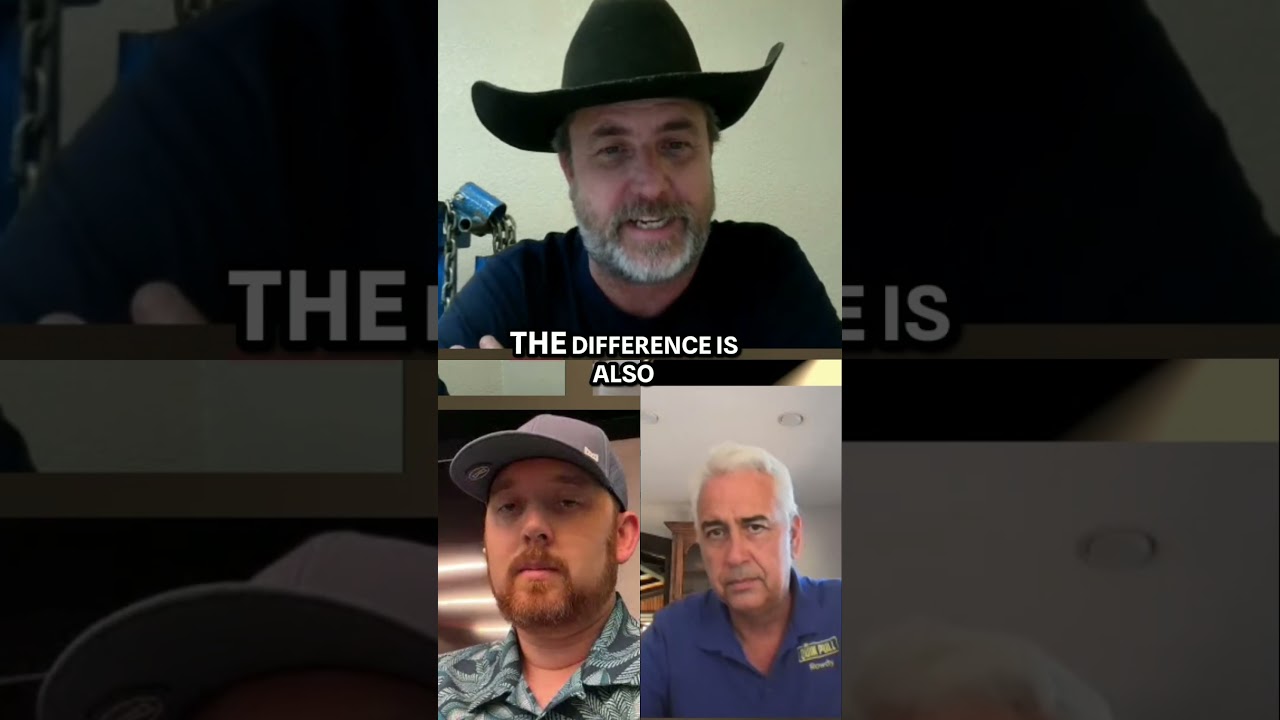
Pivoting The Gate Industry - With Lisa
In “Pivoting The Gate Industry - With Lisa,” Brian T. Frederiksen sits down with Lisa from Autogate for a deep dive into vertical pivot gates and why they’re gaining attention in the fencing and access control world. Lisa shares her journey from growing up around Autogate to becoming its marketing lead, offering a behind-the-scenes look at how a family connection to the company evolved into a passion for the product and the industry. The conversation clears up common misconceptions, especially the fear that pivot gates are unsafe or “guillotine-like,” and explains how compression springs, balance, photo eyes, bump edges, and reversing features work together to make the systems reliable and safe. The episode also covers practical benefits that make pivot gates a smart choice in the right applications: limited swing space, steep grades, snow-heavy climates, high-wind areas, and sites where preserving usable ground is critical, such as storage facilities and commercial properties. Lisa outlines installation basics, maintenance tips, repair considerations, and the importance of manufacturer training for field welding and balancing. For contractors and installers, the takeaway is clear: pivot gates are a custom, space-saving solution worth considering, and calling the manufacturer early can prevent mistakes, protect warranties, and ensure a smooth install.
Topics Discussed
Guest
Chapters & Key Moments
Full Transcript
(11,161 words)Here
Are you.
Coming. I'm coming. Yeah.
Heat.
All right. What's going on, Lisa? Today's a special episode. It is very special. I don't know. Was there ever I think we did maybe do one together a while back, just us, but it's been a long time. I don't think it was ever just us. I think I was on your show a while back when you were doing like the five minute slots and I think that was really the first podcast I had come on way before I got like super involved. Um but that is probably the last time that I got to talk about vertical pivot gates and I'm excited to talk about them with you. So, everybody that's watching, um, we've hijacked the Women of Epic. Well, you're always on it, so it's, you know, you're you're you're on there a lot, but I was asked if I would come on and, uh, help. Basically, I'm co-hosting with you because I mean, this is almost your podcast today. But, uh, Susan was doing some stuff with the Rugrats and, uh, the kid and so I said, "Yeah, heck yeah, I'll come on and talk about Pivot Gates." Right. Yeah. So, we made a pivot. Yeah, we made a pivot on tonight's show. and went straight to pivot gates. So, anybody that's watching, if you had any questions on pivot gates, drop it in the comments. You know, we'll try to answer those um as best as we can, but I think it's one of those things that not a lot of people um talk about. I know. Well, at first, by the way, this podcast was something named something called working moms. I'm like, well, we're going to have to switch that up. So, it's it's not just going to be about women in the industry, but you have became kind of a powerhouse in the pivot gate industry side of it. I mean, you're you're everywhere when it comes to not just at showing up at events and not just the ones you guys are exhibiting at, but supporting and and stuff and showing up at at the events outside of just the expos and stuff. So, let's tell everybody about yourself, Lisa. Tell everybody about who you work for, Autogate, everything, how you got into the industry. We want to hear the what do you call it? The T. Yes. Um, so I'm Lisa. I work at Autogate in beautiful Berlin Heights, Ohio, about 10 minutes south of Lake Erie. Um, and I do all of our marketing. Um, I've been there full-time, coming up on seven years. I'll have been there seven years in September. Um, which is crazy, but realistically, I've been there since 1997 because that's when my mom started working there. So, child labor laws. No, just kidding. Uh but not really. Um so I had just made a post about it I think on Sunday um about getting to see you know all of these names and companies in the industry. I used to go in and file um like our accounts payables, accounts receivables, our gate history files. I would go through and organize and sort and alphabetize. And it's been really fun for me over the last seven years getting to, you know, meet the people in the industry that I've been seeing their names for the last almost 30 years now. And, you know, getting to meet some of the other powerhouses and, you know, I would I would not be here without them. I would not be here without Autogate. So, it's uh it's been a wild ride, but I uh really enjoy what I do and I really enjoy uh Pivot Gates. That's weird. I know. It's a It's a weird thing when you when you meet somebody you've talked to and I do that all the time. You've talked to them for years. I mean, I've had reps that were reps of mine for like 20 years and then I met them, you know, in person and I'm like that is I guess it's I I don't read a lot of books. My wife does, but and I think it shows, but um it's nonetheless they she's like, "Oh, no, you don't understand. We watched the movie." And then it kind of kind of tell you what the character looks like. But but when you read a book, everybody envisions his character a little bit different. And uh you know, in your mind, this is a 6' tall, you know, Norwegian guy and and and in somebody else's mind, it's a you know, three and a half foot tall penguin looking dude. You know what I mean? So it's like weird, right? So and I think it's like that we we talk to somebody in our industry like a supplier or something we talk to for years and years and years and you have this vision based off their voice and their interactions and what they told you they've done, you know, and whether they talk about hiking a lot or boating or this or that. So you kind of envision what they look like and then you meet them in person. Have you ever had that where you met them in
Person, you're like that is not at all what I thought. Um all the time. A couple times in this industry, one outside of the industry though, I I have to tell this story because it's hilarious. when I went to college, um the lady that I was speaking with that was, you know, recruiting me, she would call my cell phone at like 9 10:00 at night, which to me, I grew up in that era of like you don't call somebody past a certain time. And she would call and I would hear her voice and she would talk to me. And then I met her in person. And this woman was, I think, 82 when I met her for the first time. She was the piano professor where I ended up going to college. And I had a totally totally different persona, totally different person, totally different look. I mean, everything. I thought she was, you know, gonna be some woman in her 40s and here was Liz Pastor. And she just I looked at her, I went, "You're Liz Pastor." I was just thrown off because I had never seen her. But she was one of the most vibrant women. And so it came through in her voice. And it just she came across as this young woman that was full of life. And turns out she was full of life but much older. I had a sales rep that had that voice, you know. I was like, "Yeah, I was talking like this. It sounded like she was smoking like three cigarettes at once and she was like had an oxygen tank. She was sitting next to like a like a slot machine saying that's my machine kind of thing, right?" And then it was like, so I just envisioned kind of what I envisioned this like I don't know this old lady that like you know was hawking up parts of her lungs or something and then I I I met her and it was like this girl was like 28 30 and I was like wow did not expect that. [snorts] Let me take back that almond roa that I got you and I was going to drop off. No, that wasn't for you. Crazy. So what what so you what were you doing? So you're in marketing now. What were you doing before that? When you came to work for Autogate, did you go straight into marketing? Um no. So I had actually come home. Um I found out I was pregnant uh at the time with my son who was my oldest child. And so made the decision to come home. So obviously mom's been there since 97, was born and raised. Knew that they were looking for an admin assistant rep. um receptionist to fill that position. And so my mom had asked the owners, Bill and Don, um she was like, "Hey, Lisa's coming home. You know, she's done it before. She's going to be trying to get a job right away. Might be only temporary. Um but can she start and fill the position at least for a little while um when she comes home?" And they were like, "Yeah, awesome. Uh have her come back." Because I kind of knew how things worked to an extent. And um she was like, "Oh, by the way, she's going on maternity leave in February." And they were like, "Bring her home." So, love both of them for that. Uh grew up with them most of my life. They're like family to us. And uh so eventually after a while I wanted to get a little more involved, wanted to do more things really, you know, believe in our product. Um believe in what we do as a company and definitely wanted to get more involved. um was seeing some places where I thought maybe I could help and uh sat down with Brian Fritz who is our GM and he was like all right do you want to you know go into this CSR role that's going to open up or do you want to do marketing which kind of he had been doing at the time we didn't really have a marketing position it was just Brian doing what he could at the time he was still national sales manager so it was Brian doing what he could to do all of our marketing and things like that um was kind of already starting to organize, you know, trade show logistics and things like that. And I was like, well, I have the gift of Gab, so let's do marketing. Um, jokes's on me because holy moly, there's way more involved in marketing, which I kind of knew to an extent, but uh, man, this has been a totally different world, but I love it. There's never the same day twice. Um, and like I said, it's it's kind of easy for I don't want to say easy. Um, it's enjoyable for me because I do, you know, believe in our product, believe in, you know, how we produce, how we manufacture as a company. Um, and so it makes it easy for me to speak honestly about what it is that we do. So that's uh kind of how I've ended up where I'm at now. So, probably the better part of
The last five years, I've been kind of poking my way around and learning more. And it's it's getting there. There's still a lot that I have to learn, a lot that I have to learn about the industry. Um, a lot that I have to learn about marketing, but, you know, there's groups like the women of FWA who, you know, open their arms and take you in and we all kind of share insights and what we're doing on a daily basis. and it's made it a lot easier over the last, you know, year or so that I've really started getting involved and talking to the other women in the group. It's it's been great and I feel like I have progressed more because of that. So yeah, and I you know I every once in a while I hear Yadira on the meetings with you guys and uh you know the women meetings I hear in the other room and I go I typically go out to the patio or something and I hear it and man you guys are just way more supportive of each other than I think than most of us. I mean, you actually will sit there and cry together over stuff that's going on in your lives personal wise. You'll you'll sit there and actually ask people, "How are you doing?" And you mean it. I mean, us guys, we just get on there and we insult each other a little bit. And, hey, you know, quit being a crybaby. Don't worry, I get that, too. I've got I've got three brothers, so I've had my fair share of that. So, it's it's nice to have a group of women, you know, in my corner. I love my brothers. I do. But the the trash talk is very real and alive. It's still there. Yeah. And you know, being marketing and if anybody's listening, it's uh the more you get into it, I think it's it's really it is a team effort, but it's not a team game because it's a lonely game. It it's not what everybody thinks. You know, you're marketing, you're you are you do have the gift of gab and I have the gift of gab, but that doesn't mean we spend all of our time in marketing gabbing. It's a lot of time by yourself on your computer drawing this up, designing this on your phone 2 in the morning, this that. I mean, it's it's a lot of it's lonely sometimes doing the marketing. So it's even though you see us all the time online, it's lonely, isn't it? Yeah. And I know you are, you know, as much a perfectionist as what I am with things and sometimes things that, you know, you would think should take about five minutes to do, it's not the case at all. And then I'm sitting there and two hours have gone by and I'm like, man, I really I thought I had this done and then I tweaked things for another half an hour and it's like, okay, well, we're this is this is good enough. Move on. Do something else. The rest of the office is all laughing. They're going out to lunch and you're just buried in your computer. There's nothing anybody can help you on, right? And you're like, I want to go work with them. Where are you guys going? But hey, let's not forget what we came here about. I want to talk about pivot gates. I know we haven't had a chance to really really talk about pivot gates and and the misconceptions of pivot gates and you know what they are. I mean, I I just assumed a pivot gate in the beginning was just taking a swing gate operator and turning around its side, right? Isn't that kind of what you know just having it? But but there's more to it than that, right? Oh, that's terrifying. So, what what makes And obviously anybody listening, don't do that. That's not going to work. But uh if it does work, don't do it anyway. So, what makes a pivot uh you know, what makes a pivot gate different than a swing gate? And when we're saying pivot gates, let's tell people what a pivot gate So maybe what's in your simplest form of explaining what a pivot gate is, tell everybody what it is and let's tell them what's different than between that and a swing gate. Um, when I'm talking to people that like really don't know, I always explain it as a railroad gate, like at a railroad crossing. Um, so you've got gates that swing and slide and then you've got pivot gates that go up and down like you're sitting at a railroad crossing. It's just got, you know, a section of fence on it instead of an arm. Yeah. Yeah. So, those flashing gates. Yeah. I mean, and they've been, you know, I I think we were going to talk about this earlier, like when was the first pivot gate ever used? And then we're both like sitting there going, "Um, I don't know. We could tell you
When the first time we saw one, but I guess they would go back to as far as manual ones." I mean, you deal with the automated ones, but manual ones, they've been going up forever and they they weigh them in the back to make them easy to open and long gates. When was the first time you saw a piv gate? Was it at autogate? Did you ever see them out before then? Um, if I did, probably not that I noticed them. Um, but I mean, I was seven when mom started there, so I was around him pretty early on. Um, and then, you know, we were in with the Ohio Turnpike. So, like all of the service entrances had an autogate system on there. So, anytime we were on the turnpike, you know, I would see the service entrances and exits and I'd go, "Mom, look, there's our gates. There's an autogate." Um, and now it's kind of funny because my kids do the same thing. There have been multiple times where I'm out intentionally out driving around, you know, taking pictures of gates cuz I always need more content. And, uh, now we'll be driving in the car and they know enough they'll see one and they'll be like, "Oh, there's an autogate." or locations that we drive by on a daily basis. There's a couple of storage units uh close to where we live. Um you know, various places where they know that Autogates exists and so they will look for them and point them out, which is, you know, melts my heart. Unless they're in a unless they're in a hurry and they're trying to get to the McDonald's jungle gym, if they still have those, then they're like, then they're not even, "Hey, don't mention the gate. It's coming up. Don't I don't want her to stop and take some pictures of this thing." So, they're like trying to hide it, distract you with pointing over there. [snorts] Right. So my pivot gate experience goes back to like I think storage ones they were called and along in Las Vegas. It's changed since then. It's like changed names of the storage complexes and I remember complexes in the I mean it's the '9s I believe the ' 90s I'm going back to when I remember seeing them. Yeah, I know. So we were founded in ' 86. Um and we came out of a fabrication company. Um, and just brief brief history of Autogate, you know, we were a fab company. Um, we had somebody drop by with a gate. We ended up reverse engineering it. Uh, it was somebody who actually, um, was in the horse, not industry, but was, you know, competitive horse riding, um, showing, not riding, competitive horse showing. And so that's how we ended up with our Congress gate um because of the Ohio Horse Congress. But um that was kind of where we started. No, I'll leave that in a minute. Okay. Right there. Sorry, that's my kiddo. Um I spotted a pivot gate. So yeah, she's going to help me talk about pivot gates. So, um, lost my train of thought there for a second. So, they started with those and you know, kind of reverse engineered it and that's where we got our start in vertical pivot gates. Um, but I remember, like I said, from filing early on. I know Uncle Bob's storage, I don't know what was out in Las Vegas, but you said storage one. I do remember seeing those, but like the Uncle Bob storage, which I think turned into life storage eventually. Um but yeah, that was uh pretty crazy to see. That's that's a lot of business that we do is in storage industry. Um we do a lot more outside of that now too, more industrial, commercial, things like that. But we still are a big part in the storage industry. Um just because you know, space constraints, things like that. uh when when we do our marketing, a pivot gate allows for extra parking spots because you don't have to have the back end for the slide gate or room for the swing gate to open. So, you know, you can market it that way. Oh, it gives you, you know, an extra spot or you can build an extra storage unit in your building if you have a vertical pivot gate. So, that gets into more of the benefits and why it works in that situation. And I don't think it's something people automatically think of. You just instantly start thinking of slide gates and swing gates and and things, you know, things like that. you don't think of a gate, a massive gate. So, and to us, we start even talking about those railroad things. Those are more like
Barrier arms in our industry, like you know, where it be like a lot of companies make automatic barrier arms where it's just a 1x3 board that goes across there. Um, so I guess it would go from a being called a barrier arm to a pivot gate once you actually have a full-blown gate being lifted up. Is that what it is? Um, yes and no. I know we have our Barracuda, which is just kind of that arm. Um, and it's a very simple, I mean, it's still, I guess you could consider it a gate. Um, but it's got, you know, your tubular steel or aluminum or whatever you want to use. Um, and we use our big operator box for that. Um, usually when you see a barrier arm like that, it's something a little bit smaller, but there are situations uh where a barracuda on one of our systems would be a necessity. Um, you can also get into like crash systems. We've got our crash barrier arm um that's on our gates. So, you know, that's a barrier arm, too. It's just significantly heavier and has that crash rating on it. So, does that go down and like lock lock in the other side or something? Um it doesn't necessarily lock. Um there's a section where it's kind of hollowed out and it's got a notch in it that it sits into. Okay. [snorts] Um, but mostly what you would consider locking it uh would be like where the um I want to say ballards, but that's not the right word. I'm blanking on it. Bolsters. So, what's going to lock it into place is the bolster that it sits down into. So, it's not necessarily that it's locking, but it's definitely not going anywhere. And if you would like to see uh an example of that, you can always go to the Autogate website and watch our crash videos. Is that autogate.com? Uh yeah, www.autogate.com. And then you can go to the drop-own menu, you'll see vertical pivot shield. If you go to our shield, it says shield videos. Um they're really cool. That's like one of my favorite things to show people at trade shows because that's the other thing too. As much as people, you know, might not know about vertical pivot gates, um, you know, they also there's people that we've worked with for 20 years that had no idea that we manufactured crash systems, M30s and M50s, and I'm like, yeah, we tested them in 2006. We've had them for 20 years. Um, but that's kind of the fun thing that you can do with vertical pivots, too, is have those big crash barrier arms that lift and lower. You don't have to wait. they're not quite so slow going back and forth opening and closing. So, well, let's talk about that opening. Um, and this is probably a huge misconception out there is about that if you walk under this thing, anything happens, catastrophic happens, something happens and somebody hits this thing, anything that gate's just going to fall down on you and your car and and that just freaks people out. I mean, you don't you're like walking underneath it, you're looking around it, you're like you're afraid that thing because these things typically come installed, right, already into the equipment. you you you build them per that and we'll get into that. But let's talk about uh how it's actually working. Like is this thing is this thing just being barely held up and one little chain breaks or something and this whole thing just falls down and and causes a disaster or what what's what happens? No, that's not going to happen. I'm laughing because I saw um JC Guri has the uh guillotine comment there. Um that is a common misconception. No, it is not a guillotine. So when uh you see those, it's going to be more prone to if something happens, it's going to open. We've got compress compression springs in there. So if something's going to go wrong, it's going to open or at least stay at like a 45 degree angle. And that has to do with the balancing of the gate. Um we've got them perfectly balanced when they go out on site. And um that's what's going to help it stay safe for you. Um because it's going to want to open instead of come down. So we're not the compression springs. You're actually putting compression springs in there. Us hitting us is not the compression spring. So uh you've got something set up to hold to hold it open. So there So your motors So just to clarify, your actual motors are pushing the thing down more than pulling it up. Um yeah, I mean and it's only a half a horsepower motor anyway. So when you know when it's balanced in there, it's
It's going to hang. So wherever those springs are pulling it to, it's just it's going to hang right there. And I mean the the probability of all of the springs snapping at once, I mean that would realistically that would have to be the only thing where it could possibly ever come all the way down. And just the probability of that happening is you you've got bigger problems. Something else happened. Something else happened. Yeah. Because I I you know and I remember the first time uh we went out and there actually we went out and worked on one a long time ago. Many years ago back when it was at storage one and we opened it up and we were going to replace the gate and then uh we actually had to call and have this thing completely recalibrated I guess because we had to build the gate exactly the same to do any work on it because of the weight. So, when people are working on these things, um you deliver these things out and the gate uh installed inside the operator, everything comes out on a truck and it get kind of gets dropped down and bolted down. Um and I'd like to get into some of that footer, but what happens when we got to repair these things if it gets hit? What What do you think the procedures are on that? So, I mean, we've got replacement gates that we can send out. It really depends on how damaged the um linkage arm is. So if that linkage arm gets hit, that's what's attaching um to the inside to the inner workings of the gate. Um the gate itself can be bent and still operate to an extent, but it's really that linkage arm that attaches the gate to the operator. And that's where you're going to want to, you know, see is that bent, is that busted? Is that compromised at all? Um, and then once you take that gate off, so like what we do, um, as the manufacturer, if you're buying from us, we have those drawings in house of your gate still. So we make that gate exactly the same. Um, and then we send it out to you. And obviously, you know, we do our own in-house training on this. Um, you know, going over replacement, taking springs out, putting them back in, replacing the gate. Um, it is important that you do know what you're doing. So obviously, you know, you can't there's recently been one instance of a group of um I will call them service techs uh that did not know that what they were doing with our gate and they could have been seriously hurt. So you do still have to know, you know, how to replace the system and take the proper precautions. Um we've got a gate pin in the back, so you want to make sure that that's in holding the gate in place as well. Um, but you know, there's a process for doing that, but like I said, it depends on that linkage arm, whether or not you're going to have to replace, you know, the operator itself or if you can replace just the gate. Um, it it really depends on the situation and how much damage you've got to the system. So, if the if the gate the end of it gets hit, you can cut it you can cut it off and reweld a new end to it or something. you can do some you could do some repairs to the gates or is that just completely not recommended at all that you do any modifications to the gate or repair it or is this like what's a subject we're not supposed to talk about? I will say I will say we have some of our installers um and distributors who have come to Autogate. they have learned how to balance the gates um and do everything that we do in house and we are comfortable with those companies you know cutting and field welding. Obviously we know that kind of thing happens but you're going to want to check with us on your warranty then because it's going to void the warranty unless you have come to us and we have worked with you and you know we've said you as a company are able to do that. Um and there's only a handful like that. Generally, it's going to be we're going to re- um remake a gate for you and send it out to you. Um you know, I'm not sure, and this is one of the things that I don't know, I'm not sure how many people out in the industry are doing that field welding. Um I will say if that is something that you're going to do, you then need to make sure that you go back and you rebalance the gate to make sure that it is in balance. And that's one of the biggest reasons why we ship assembled systems now. Um, every once in a while we'll send created if we have to, but you know, shipping those assembled
Systems make sure that, you know, it comes properly balanced. And realistically, it's one of the easiest installations. You pull it off the trailer, you set it on the pad, and you bolt it to the ground, wire up your electric. Um but you know like I said that that balance is one of the main reasons we want to send those systems assembled because that means that we are you know mitigating some risks there. So do they come with a there's got to be some safety devices obviously factored in. Do they come with some pre-mounted photo eyes where you just got to mount a reflector on the other side or have a safety edge along the bottom? What I mean what does it take to get that thing operating? Like a lot of operators now, they won't even operate unless you've got a in this case, I don't know why you would have an opening. There's nothing here, unless somebody's standing above the thing, right? But you got to have an opening and a closing um safety device. What what what does it take with yours or what does it come with? Um you know, it depends on what the usage is. We obviously go by UL. Um so whatever class it is because there's some classes where you know, you don't have to have those things because somebody's there physically pressing a button to open and close it. Um, you know, it depends on what you're ordering it for, but yeah, we we have photo eyes. We've got bump edges um along the bottom and along the back edge. So, where that pinch point might be, there are minimal pinch points as opposed to other gates. Um, but where that pinch point would be in the back where it's going into the throat, it's got edge along there. Um, it's also got the uh inherent reversing. So, like if you're under it, it's going to press down on you a little bit. Like if a car is under there, obviously it's going to dent your car, but it'll say, "Oh, hey, there's something there." And it'll reverse. So, not only does it have that plus the bump edge on the bottom. Um, and of course, there's, you know, other devices that you could put on. You can as many as you want to wire up, you can put in there. Um, you know, we've got loops for travel in and out with vehicles. So pretty much anything you put on another gate. Yeah. Yeah. So Jeff, I don't know. Do you know Jeff Graph? Uh not he does a lot of training with us. He always comes to the fence show and does training. He'll be doing some uh some training again this year. So he I believe he's out in Ohio. So he has a question. You know, he says uh he does a lot of gate welding. He's really experienced in fencing. Does a lot of stuff um gate trainings and stuff. So um I he says he does a lot of welding in the field. How can a company how can his company go about going through your training? He's in Ohio. Um, if you give us a call, uh, especially if you're in Ohio, 419-588-2796. Um, and then you're going to want to talk to either tech support or um, go through to the front desk. Um, Amber, our admin, will help get you signed up for that. Um, you can also talk to any one of our sales rep sales reps and they'll put you through. Um, we do about one every other month. Um, I'm not sure if September is full or not yet, but I'm sure we can find a spot for you. Jeff, drop a text to me. I'll figure it out, get you in contact with them as well. We'll help you kind of facilitate this and we'll get you um uh we'll get you Lisa's number in case it's late at night or on the weekends you need to talk to somebody. Thanks. Thanks. He's like, "You're in Northern Ohio." Are you You're in Northern Ohio. Uh yeah, we're about 20 minutes from Cedar Point. Okay. Yeah. Cool. So, there you go. You got people are interested in this. So, we and we'll maybe we'll get together and do some uh put some training out for people um with FWA, the Fence University, too. I know we talked about that. So, you'll see Jeff um at the fence show. Awesome. So, looking kind of there. Yeah. Um Jeff said hello earlier. Let's go back in here and say hi to a couple people. Uh, you know Karen? Uh, you know Karen already, I think, from Easy Lver. Yep. Yep. So, she said, "Hey, what's up, Karen?" Uh, JC Gur's in the house. He says, "Too much laying down on the job."
You know what? They will not let me live that down. I took one photo. One photo. Do you know this photo that I'm talking about, Brian? I I don't. I wish I had it now because I would pull it up. So, if anybody has it, drop it. We're going to drop it. Mark, if you have it, I'm assuming that's Mark. I don't know if there's a way to drop uh images on there, but post it. We'll figure it out. I'll send it over. We'll get it up on here. But, but hey, let's talk about the foundations of these things a little bit because you said easy to install. So, um is it as easy? I mean, because on a gate operator, we we we pour concrete pads ourselves at Las Vegas Fence. Uh you know, it's just it's our preferred method. We do a lot of commercial industrial and I don't um really drive a lot of posts and do mounting stuff like that. So, we pour concrete pounds. We pads. We don't do stands and things like that. So, um I'm just not equipped for anything else. So, we run the conduit and stuff. So, I'm assuming this takes a sizable concrete pad though. I mean, a little bit bigger than a 2 by two. Yeah. Um it's off the top of my head, I believe it's 7x4. Um which gives you, you know, room around the edges, but you just you want to bolt it down in and it's going to go 36 in. Um or to the frost line. So, if you're a little farther north, like up in Canada, I know that go down a little bit farther um down below that frost line just so that you know when it heaves it's not going to mess with the base. Yeah. So, really that's I mean that's really not as big as I thought. I was thinking it would be wider than 4 feet. So, this thing doesn't have a huge footprint for being as as massive. So, what's uh let's talk about the gates though. Um the operators you say it's a half horsepower motor. Is that just like one unit kind of works for everything or you just you you you do the balancing different? Do you do you do weights or balances on the back of the gate to to do this or is all done with springs? So, we do occasionally put counterbalance on it. Um, it just it depends on the length and height of the gate. Our operators are all the same. So, if you get an operator from us, regardless of what gate is on that, that box is going to be the same size. It's going to have the same components in it. The only thing that's going to change in there is the number of springs. And then like I said, you might have a counterbalance on it, but other than that, everything in there is going to be identical. So, yeah. So, let's talk about servicing these things, though. What is it what's is it service pretty similar to a a gate operator motor? I mean, is there is is it easy to access the service manuals? Does have to be a specialized service trainer? Do you have service programs for that? Um, you know, we encourage everybody to come to our training class. Obviously, there's people out in the field who have been doing it for so long now, but you know, Brian trains some of those um folks, you know, some of them have been with us for, you know, 20 plus years, 25 years. Um, you know, some of them helped us learn how to service the gates back in the day. So, um, it's, you know, it's pretty straightforward. Every operator comes with an installation and operation manual. We've got a great tech support team that you can call and get a hold of them. Um, it's a little tricky when you've got different time zones sometimes because we're there till 5 and 5:00 here is what two for you guys out there I think. uh, but our our tech support team is phenomenal. Brian Polland, uh, Marshall Howell, they do a great job answering questions. Um, but I mean a lot of times sometimes you'll get things that are hard to diagnose, but we really believe in a strong preventative maintenance schedule and that tends to alleviate a lot of problems. So basically twice a year, make sure you, you know, grease your springs and put oil where there needs to be oil and check it out. Uh, you do want to make sure that you rotate the belts um about every six months. So, when the gate lifts and lowers, it's only doing a half a rotation. So, you want to make sure that you flip those around and take them out. Um, that can be a little tricky because you have to take the motor harness off, but you know, that's something that you could learn in our training and there's pictures and everything in our manual, too. So, like I said, you can
Always call us if you need help doing it, but we do uh encourage people to come to that training and we'd love to get more people coming to that training, too. Yeah. Anybody that's interested, drop it in here. Lisa, Lisa will go back and catch these, I'm sure, or one of us will. Um, and so I am curious, though, since I I know you're not on the tech support side of it, but you obviously um you guys aren't such a massive company that you don't hear about stuff that's going if there is something that happens, right? So, you probably hear about it. So, um, what is what do you think some of the common, um, mistakes are made when they're installing it? Like something you've heard more than once that an installer did, they got this unit, it was delivered out there, or is it just pretty much a plug-and-play thing and you don't have that many issues? I mean, with the actual installation, um, it's it's a plug-andplay. The issues that we run into is, you know, when there is a disconnect and maybe, you know, the architect or engineer for whatever reason, and we're pretty good about talking to these people to begin with, but um you know, there's just something with the drawing where maybe there was a grade where there wasn't supposed to be and so now something doesn't sit right. Um you're going to run into those issues. But as far as the actual installation process, um it's it's pretty straightforward. Plug and play. Set it down, bolt it, make sure you got, you know, whoever's hooking up your electric, and then um putting the safety devices in, you know, the photo eyes, stuff like that, wiring those up. So, um is are these DC motors or AC? Are they all um So, you can be hooked up to AC power, but it's got a battery backup. So depending on how many times you're using it, um, you know, it can get switched over in case of a power outage, you going to get about 150 cycles out of your gate. Yeah, that's plenty. So it is an AC motor with like a battery built into it, like a inverter or something. Okay. Okay. Yeah. I mean, that's that's that's how they all used to be like there. Remember you used to have to get the battery backups, but I would imagine I was curious about that because you said half horsepower. Um what what do you think the future of these things are going and uh have they been changing like circuit board wise? Is it I mean when I first started doing gate operators all relays and stuff inside now they're getting smarter smarter boards and stuff but along with that comes more features and more stuff to kind of you know troubleshoot. What are these are these things going to get smarter coming up in the future? Um as it stands right now we've got our Genesis board that's in it. So, you know, it we we started with I'm trying to figure out how far back. So, from my memory and what I remember and things that are still um occasionally out in the field. So, we had an Apollo board uh that was in running it to start with and then we had a Lyftmaster board and then I think it was 20 17 or 18 um I started back in 2019. So, it was not long before I got back that we switched over to our Genesis board. So, it's our Autogate proprietary Genesis board. Um, and you know, it's it's a pretty basic circuit board. You know, you're hooking things in. So, it works with all kinds of uh access control. There's not really anything that it doesn't function with. Uh, as long as you can wire it in. Yeah. Well, I'm I'm designing the very next smartboard for gate operators, which it basically what it's going to do is start monitoring my social media. So, when you pull up to it, it's gonna be like, "I don't know. Lisa hasn't been liking a lot of my pictures lately." So, it's going to be so smart that it will know that and it's not going to let you in. So, if you let me know when you've got that finished and the gate doesn't open when you get there, it's probably because you didn't like enough of my pictures. So, I'm just Oh, I'm gonna have to change that. The ultimate smartboard. Yeah. So, hey, there's Yadira came on here. She wanted to say hi. So, uh that's my boss. That's my boss. Uh she's in the other office over there. Uh looks like Jeff uh Jeff definitely wants to sign up. So let's get Yeah, we'll we'll definitely sync everybody up.
Yeah. So let's try to rally some people. Let's get a training going and uh I'd like to come out to that and uh run through it as well because I'm definitely fascinated, you know, fascinated by that stuff. Let's do some Wow, time went by quick, man. Look at that. I know. I'm looking at it and I'm like I want to keep going with it. So if anybody's still, you know, tuned in and with us, thank you. I know this usually lasts about a half an hour, but you know, there's so much to cover on this topic and it's it's one I don't get to talk about a lot. You know, we uh we love having this podcast and we love, you know, doing things focused. We've been doing a lot with mentoring lately and uh being women in the industry, but it's it's fun for me to get to talk a little bit about, you know, what I see on a daily basis at work. Yeah. Yeah. So, I do want to get um and it's nice because I know that's why I was so excited when they and they're like, "Do you want to come on and and talk with Lisa?" I'm like, "Hell yeah, let's do it." But let's do some rapid fire um questions for you on this. And I just saw these for the first time, too. So, we're going to spit them out there if it uh and I'll help. Hey, that's my job. Aren't you Aren't you technically my guest? I feel like you ought to be answering these. I know, but but we want to hear more about uh about Pivigates, and I don't know that much. I've never actually physically installed one. I've just been out to them and I've done everything you're not supposed to do when you go out and and service a pivot gate. I mean, I've cut the I've cut the ends off. I've brought them back to the I mean, 10 15 years ago, I brought them back to the shop and just rebuilt them, laid on top of each other. Probably wasn't even the same thickness steel, went installed them and and and now that storage unit is probably I don't even think it's there. They ended up replacing it with a slide gate probably because of the gate I built. I don't know. But uh it's uh you know decades ago but I'm saying that but watch it was like a month ago right? No it was not a month ago but but rapid fire biggest pivot gate you've seen. Biggest pivot gate. Um I don't know. There's there's some out in the yard. They're very tall. I mean I'm pretty short but sometimes you see these gates that are like 10 feet tall and you look up and you're like oh my goodness. But, you know, just because of the nature of the system, they're usually a little bit shorter. So, the monster tall gates aren't generally super long. Um, but yeah, 10 ft tall. Um, longer gates, 26 ft, those are pretty expansive. And then if you put them, you know, where it's a dual opening system, um, that gets pretty long and that's pretty impressive to see. Usually those are at like distribution centers that have big trucks going in and out. If you haven't seen one of these gates in person and you see a 20 foot tall gate 6, eight feet tall, swing up like this, it is it is something to see, isn't it? You're just like, "Wow." And because I've seen prisons where they the whole gate goes up like this, right? And you drive under and that and you know, then that's pretty common in prisons and things, but to see a gate swing up like this is really cool to see. So, um, I'm, you know, I'm I'm I'm hoping that it takes off, you know, it takes off even more. So, here's going to be a tough one for you. So, I'm just going to throw it out there. If you if you know the answer, great. If you don't, you just say pass and we'll move on. Okay. Um, so favorite pivot gate manufacturer. Oh, that's that is so tough. Autogate. Autogate. Not biased at all on that one. Right. None. Zero. Absolutely not. So, biggest installer mistake besides not using Autogate um when you're putting in a pivot gate. Biggest mistake. Um oh, probably putting the wrong hand on a side, the way that things are handed. So, if you've got like public and private side and maybe if you're brand new and you put it on the wrong side, um that's probably a big one. So, when they order them up, they order left or right. Okay. So, that means access panels are on a different side or something. Is that what you would have it? Otherwise, you end up putting a fence right right in front of your access panels or something, right? And then you won't be able to get
Or it's or it's turned facing the public, which [snorts] there are certain situations that call for that. Um, but generally speaking, you want those on the private side so nobody can get into your gate. But if you didn't do it on purpose, it was a mistake. Okay. Best application. I know you see it everywhere. What's the best application for a pivot gate? For a gate that swings up. Everywhere. Um, I don't know. I like seeing them in, you know, northern territories because it's also very easy to open the gate and plow. Uh there's no tracks that snow is getting stuck in. So super great application to have um up north as far as being in the south. Just I don't know. I like I said, I'm super biased, but it's definitely space saving. Um, y and anywhere that you've got, you know, just a little room to work with, you don't have anything on the back end. It doesn't have to swing open. So, if you've got anything in the way, um, you know, like a wall or something like that, it's it's going to work for you in those situations. Yeah, I agree. So, it's compact and you can get it in a place where you don't have room for a gate to slide because I mean, we I come from Alaska and stuff. my uncle's own fence companies in in Oregon and Alaska and it was it was a lot of can lever gates because you didn't have the track and stuff on the ground. So when you got ice and snow and things like that and you you know you needed your gate to be able to move you need that thing off the ground and you need to be able to push through the snow and that ice would get on the tracks and things. So this is another good another good place to use that would be somewhere if you had weather and snow building up because it'll just lift right out of the snow and then you can plow through with your vehicle or hopefully a plow, right? So that's that's a good answer on that. Um what's the most challenging install on pivot gate you think? Um out of balance like unlevel ground or somewhere where I mean is there is there a situation where it would make it more challenging? well, we did have one of our um dealer installer companies just uh put in a new gate local to us about 5 minutes down the road from the shop actually. Um and it was one of those situations where there was a little bit of a disconnect and the drawings that we had there was no grade and there was a slight grade when they went to set the boxes down. And this particular installer did a great job. Uh, shout out Matt from Citywide. Uh, he was able to put some shims underneath and get it solid and make it so that it was secure. And, uh, like I said, he did a really great job with that, but probably those situations where the drawings that we were given uh, are not what the contractor decided to do in the long run and didn't give us those updates. Yeah, that'd be bad. That'd be challenging. It's Yeah. So, it's like any get operator, there's challenges, but um with your stuff, it seems like it's pretty nice. It comes out and you just set it down. If you if you place it right, pour your pad right, get your foundation right, um it should go in pretty smooth and probably less time than you spend hooking up other stuff. So, I like that. Um where do you see the pivot gates, the whole pivot gate industry in the next 10 years? I mean, opposed to now. 10 years from now, obviously technology changes, the industry changes a little bit. I mean, with all that all that you guys are doing to get the name out there and and make awareness for Pivot Gates, where do you think it's going? Um, I think there's a lot of room to expand. Um, you know, we we talk about it sometimes and I get a little, you know, ahead of myself because I see, you know, Fence Workers Association and going uh across the pond a little bit and I know there's still so much of a market that we haven't tapped into here in the US. Um, but I I see pivot gates, you know, making their way across the ocean at some point. Um, there's a couple of groups that I have followed that are, you know, UK based and things like that. And you know, not to I never want to trash a swing or a slide gate. There are certain applications for both of those where, you know, it's a great use case. Um, I just happen to
Think that vertical pivots are better. But, you know, I see a lot of things um posted. I think one of them is gate safe, but there's always, you know, some issue going on where somebody's getting hurt or, you know, things that were absolutely preventable. And in my brain, I'm always going like, well, that pinch point doesn't exist on a vertical vertical pivot gate. Um, so I think the next 10 years, even aside from, you know, technology expanding and things like that, you know, I I personally would hope to see us, you know, grab that market share in the US and be able to expand outward a little bit. So, yeah. So, I do want to do some takeaways. I know, um, this is longer than, um, I said it was going to take today. We're uh probably I know you guys are normally w it's you and I neither neither of us know how to shut our mouths. So I knew that this was going to run long today. I could go on for an hour and a half, two hours about these and plus it's an industry I find fascinating. I I mean uh like I said until you see one in person it's you really it's like it's like seeing it's like seeing some amusement ride for the first time. And uh it's not that kids you should not jump on this thing. It's not an amusement ride but it's no fun. It's not a catapult. So don't Yeah. Don't go on these things. So, um you know why I I do want to I do want to do some stuff takeaway for people that are watching this thing um that may have jumped on a little later, didn't hear the whole thing. Um on when you when someone should choose a pivot gate and you know or consider a pivot gate and I believe it I believe it's a practical solution when you got a little bit heavier gates too because you guys can adjust for that and you can make a gate that's heavier um less likely to fall over. You don't have as much chances of it, you know, just one wheel breaking in a whole gate falling. you've got um and it does like she said it it it ends up getting to a certain point where it kind of stays it stays at one spot and you've got to push it down or pull it up. So it's going you know it I think it's I think they're a lot safer in in a way than some of the other gates when you got heavy gates. Um so and then limited swing space that's huge. I mean you don't have room to slide because sometimes you're in between two buildings or in between some storage units or you're in between somewhere where you don't have you've got a 20 foot opening even a canal reate you better have 32 feet beyond that right? So you're talking about you need 30 40 ft for a 24T opening. Um this is going to give you that same 24T opening with maybe only another 7 8 9 ft, right? And now you're opening an entire gate up. Obviously at least the width of the height of the gate. It better go up. So it does that, you know, that's a big deal. Steep driveways. I think this is something if you built this gate correctly, um you could you could build this thing on a steep driveway and have this thing swing up out of the way and come back down. So I mean that's a huge advantage. We do that a lot. Um, that's that's a big selling point for us. Um, you know, a lot of places now like storage units, they're building new, they're going to have a nice smooth grade, but that is not always the case. I mean, we we've had some units where it's got, you know, drainage swells. So, you see it start here and then it gets really big down to that drainage and then it tapers off again. So, we we custom build and that's the other thing, too, is we custom build these to your site. you know, somebody's going out and taking measurements. Either, you know, the installer is taking measurements if it's close enough by us. I know we've sent people out to take measurements before just to be sure. Um, so that's I mean, that's a huge selling point for us is being able to match those. It goes goes like this. It could you could build a gate that goes out, goes a V-shaped down into a ditch, and comes back out and have it still lift out and come back in. You can't do that with a lot of You can't do that with a can lever gate. So, you can't do that with a swing gate. It's, you know, it's tough. So, I think that's a big that's a big plus is and I and we didn't get into that. I know we could have got into about that, but the steep, you know, on steep driveways and stuff, high wind areas. Um, also, you're not dealing with two leaves trying to come in here, a leaf with a magnetic lock and things
Like this. Um, that would probably be a good spot to use this. Um, you know, different different size openings and different size like that. So, I did want to kind of get that out there to people. There's a lot of applications when maybe hopefully I made you guys think about a little bit. reach out to Lisa or one of us and we'll get you in touch with Lisa um to talk about at least getting you a number or something if she wants on um building you a custom gate and and an operator. So, biggest myths I wanted to smash this you guys. Biggest myths about pivot gates. These things are not going to just, you know, unless there's some catastrophic, like she said, one in I don't know how many time chances of all the springs breaking, this thing is not just going to fall down and hit you in your car in the head. If anything, it's going to go up to a certain point and and probably safely stay up so you can get out, you know, get out or get them underneath it. Um, so that's a myth. I don't know if you had any other myths of pivot gates that you wanted to crush, Lisa, on that, but I think that's the biggest one. Yeah, I mean, that's that's the one we hear. I'm still laughing at guillotine. Um, you know, people call them chop gates, things like that. But uh we really this is you know I hesitate to say things so people you know don't come to sue us later provided something catastrophic would happen. I really think this is one of the safest systems that you can find out there. It just really does its job well. so it's it's not going to hurt you and like I said if if something catastrophic is happening you've got bigger problems because there's something else going on. Yeah. and we we spend a lot of time talking about safety, but I think every every time they're talking about safety and and and stuff like that, they should at least bring this up. Hey, here's another option on that. So, um I think it's really cool. Not that our operators aren't safe. There's I mean, we've got we've done we've came so far in the last I'd say 10 years. Um it did it kind of stalled out for a while, but the last 10 years, we came a long ways on making all the gate operators safe out there. So, whether you're using a swing gate, slide gate, they're not the same ones that were on the market 10 years ago, um you know, that are out now. So, um, definitely, uh, take a look at this though. It's another option. Um, advice we want to give installers that are considering doing their first pivot gate. I think Jeff kind of answered it right there, right? Um, what what's your advice for installers doing their first pivot gate? Um, call and talk to us. Even if you're not able to, um, you know, come out and do a training, like I said, we highly suggest that, but you know, call our tech support team. Um, you know, call our sales guys, Chris and Andrew and Tony. You know, they'll they'll walk you through some things, too. Um, but realistically, if you're looking at installing one of these for the first time, it's plugandplay. It's pretty straightforward. Yeah. So, everybody that's listening, Lisa, um, thank you for coming on. Everybody's listening, if you enjoyed this episode, you want to hear more um, episodes like this or get Lisa back on or someone else have some questions, share your experiences about this one in there. Um, if you enjoyed it, drop it. drop something in there, like it, follow it. Um, and ask some questions. Um, let us know, you know, give us some future episode ideas. You know, we'd love to bring on some other topics um for gates or events that you want to discuss. Lisa, thank you um for taking time away from your family um at this late in the evening for you. Thank you. You know, I was excited when uh Susan told me you were coming on because it's not very often that I get to be on with you. I know you're doing your thing on your show and we've got our thing on our show and sometimes there's some crossover, but it's uh it's fun to talk to somebody that's, you know, out there with the gates and systems and we can talk a little bit of shop. Yeah, it's been fun. Everybody's listening, thank you. Drop some comments in there if you enjoyed the show. We'd love to hear the feedback on that. Um, if you're watching this later, thanks again if you watched it live. Um, everybody, we appreciate that, too. We know it's a it's a big commitment to take time away from everybody and watch us for an hour ramble on about stuff
That maybe only us find interesting. But have a good one. We will see you guys shortly. Lisa, thanks a lot. Thank you, Ryan.
Click any timestamp to jump to that moment