Commercial Fencing & Gate Projects
This category covers commercial fence and gate work, including bidding, estimating, site walks, layout, submittals, coordination, and the special requirements that come with larger or more complex projects. It also includes topics like project risk, schedule pressure, specs, security requirements, and working with general contractors or property owners.
Commercial work matters because it can create bigger opportunities, but it also brings more ways to lose money if you are not prepared. Episodes in this category will help contractors understand how to price smarter, manage risk, communicate professionally, and handle the details needed to deliver commercial fence and gate jobs correctly.
Built to Last: Composite Fence Best Practices & Common Failures
In “Built to Last: Composite Fence Best Practices & Common Failures,” The Fence Podcast dives deep into what separates a successful composite fence install from an expensive callback. Brian T. Frederiksen and co-host Sasha Founders Fence talk with Lisa from Greenwood Fence about how she got into the business, how Greenwood’s modular aluminum framing system works, and why composite is increasingly replacing wood for customers seeking a low-maintenance, long-lasting solution. Lisa explains that composite fencing combines wood fibers and recycled plastic, offering durability, color retention, and a 20-year warranty—while also emphasizing that the product is only as good as the install. The conversation is especially valuable for contractors. Lisa outlines the most common mistakes installers make, including incorrect post spacing, missing insertion brackets, skipping the one-inch spacer, and failing to account for thermal expansion. She also highlights why composite requires more precision than wood and why Greenwood is shifting toward installer certification at Fence Show and future training sessions. The episode closes with practical business insights on quoting accurately, avoiding costly shipping mistakes, and helping customers choose between composite, vinyl, and other options based on budget and site conditions. A bonus segment on FWA Health adds a useful industry benefit for contractors and their families.

Pivoting The Gate Industry - With Lisa
In “Pivoting The Gate Industry - With Lisa,” Brian T. Frederiksen sits down with Lisa from Autogate for a deep dive into vertical pivot gates and why they’re gaining attention in the fencing and access control world. Lisa shares her journey from growing up around Autogate to becoming its marketing lead, offering a behind-the-scenes look at how a family connection to the company evolved into a passion for the product and the industry. The conversation clears up common misconceptions, especially the fear that pivot gates are unsafe or “guillotine-like,” and explains how compression springs, balance, photo eyes, bump edges, and reversing features work together to make the systems reliable and safe. The episode also covers practical benefits that make pivot gates a smart choice in the right applications: limited swing space, steep grades, snow-heavy climates, high-wind areas, and sites where preserving usable ground is critical, such as storage facilities and commercial properties. Lisa outlines installation basics, maintenance tips, repair considerations, and the importance of manufacturer training for field welding and balancing. For contractors and installers, the takeaway is clear: pivot gates are a custom, space-saving solution worth considering, and calling the manufacturer early can prevent mistakes, protect warranties, and ensure a smooth install.

Brian and the Full Fence Show Exhibitor Roundup
In “Brian and the Full Fence Show Exhibitor Roundup,” Brian T. Frederiksen brings together a practical, industry-focused conversation with Dalton from High Point Fencing and Mark from JC Gury, with Susan Worley helping steer the discussion around planning, production, and show logistics. The episode centers on a deceptively simple but critical topic: pre-construction meetings. Dalton explains how thoughtful pre-job coordination can prevent costly delays, while Mark connects those same principles to his decades of experience in landscaping, plumbing, and sign manufacturing, emphasizing that clear scopes, shared expectations, and internal production meetings are essential to profitability. The conversation expands beyond jobsite planning into documentation, scheduling, and trade coordination. The guests discuss how assumptions, missing paperwork, and poor communication create project failures, especially when multiple trades are involved or when fencing is the last piece of a larger construction sequence. Susan also offers a behind-the-scenes look at how the Fence Show and Security Expo uses pre-construction-style meetings to coordinate with the property, vendors, and hotel teams — a process that has helped establish the event as an official annual fixture. The episode closes with a preview of Dalton’s Full Throttle Education sessions, designed to give contractors immediately usable tools for accountability, communication, and better project execution.

Inside Full Throttle Education and Black Vinyl Fencing
In “Inside Full Throttle Education and Black Vinyl Fencing,” Brian T. Frederiksen brings together Veronica, Zach Romero of Blackline HHP, and Sasha for a lively conversation about what it really takes to raise the bar on education in the fencing industry. The episode centers on the upcoming Full Throttle education program at the Fence Show, where Veronica explains how the curriculum was built from real-world installer, sales, and operations experience rather than recycled presentations or thin sales pitches. With tracks covering gate operators, customer sales training, bridging the gap between sales and operations, post-to-profits, and bidding commercial jobs, the goal is to give contractors practical tools they can use immediately — and then continue accessing through Fence University after the show. Zach adds a manufacturer’s perspective, sharing the story behind Blackline HHP’s focus on black vinyl fencing, why the company doubled down on a once-controversial niche, and what contractors should know about evaluating vinyl quality. He breaks down wall thickness, virgin versus recycled material, extrusion methods, and why installation practices often matter more than the product itself. The episode also highlights the new instructor voting system and the value of investing in education, networking, and industry relationships — especially for teams looking to grow faster without wasting time on generic advice. For contractors seeking better systems, better installs, and a better return on training, this episode makes a strong case for going “full throttle.”

Stop Sending Out Trucks That Aren't Making Money
In “Stop Sending Out Trucks That Aren’t Making Money,” Brian T. Frederiksen sits down with Jeremiah to tackle one of the fencing industry’s hardest truths: busy crews do not automatically mean profitable crews. Jeremiah, now working with Secure Tech Fence Systems in San Jose, shares how commercial and public works contractors often lose margin through low-bid work, rising labor and fuel costs, poor production tracking, and hidden extras like submittals, CAD drawings, engineering revisions, and third-party inspections. The conversation makes a strong case for pricing based on real-world productivity, not outdated assumptions or the fear of losing work. The discussion also drills into the systems that keep a company profitable. Jeremiah and Brian stress the need for better coordination, clear accountability, and pre-job checklists so crews show up with the right materials, drawings, and expectations. They talk through the common mistakes that lead to return trips, missed hardware, and wasted hours, then connect those mistakes to larger business problems like underpricing gates, failing to ramp down overhead, and pricing jobs just to keep trucks moving. Listeners will come away with practical reminders on how to improve crew performance, protect margins, and bid more confidently in commercial fencing.

Find More Commercial Fence Jobs with Construction Notebook
In this episode of The Fence Podcast, Brian T. Frederiksen speaks with Jordan from Construction Notebook about how fence and gate contractors can find and bid more commercial work. Jordan explains that Construction Notebook is an online plan room and digital project publication that helps contractors discover public and private projects, search by keywords like “fencing,” track bid dates, receive addenda alerts, and review bid results and bidder lists. He also outlines the company’s history, noting that Construction Notebook began in 1953 as a bulletin board for construction leads and evolved from printed plan-room books into a fully digital service in 2025. The conversation focuses on practical ways smaller contractors can use the platform to expand. Jordan describes free trials, subscription options, project notifications, light takeoff tools, and how contractors can use the service to identify opportunities, monitor competition, and stay organized. Brian and Jordan also emphasize the importance of reading plans and specs carefully, understanding bid limits, and avoiding rushed or incomplete bids. The episode closes with an invitation for listeners to attend the Fence Show commercial bidding class, where Construction Notebook will be demonstrated in person.

Think Like an Entrepreneur with Matt Warner from Empire Fence
In “Think Like an Entrepreneur with Matt Warner from Empire Fence,” Brian T. Frederiksen sits down with one of the fencing industry’s most energetic operators for a wide-ranging conversation about growth, culture, and building a business that goes beyond the fence truck. Warner shares how Empire Fence evolved from netting into residential and commercial fencing, fabrication, sports solutions, software, powder coating, and even real estate development. His big takeaway: contractors should stop thinking only like fence installers and start thinking like entrepreneurs—look for ways to diversify, create more value, and build multiple revenue streams without losing sight of profitability. The episode also gets practical. Warner and Frederiksen dig into backlog management, explaining why contractors should keep three to four months of work booked, raise prices when demand is strong, and use backlog as leverage instead of fear. They also tackle real-world contractor questions on core drilling, rock breakers, and jobsite safety, stressing the value of working with insurance and safety teams instead of against them. Throughout the discussion, Warner emphasizes leadership, Monday morning meetings, honesty, and culture as the foundation for long-term success. It’s an encouraging, tactical episode for fence and gate contractors who want to grow smarter, protect margins, and lead their teams better.
How to Break Into Commercial Fencing with Sasha, Chance, & Tyler
In this episode, Sasha hosts a discussion with Chance Roy of Cinjun Fencing and Tyler Cruz of B and Brown Fence Company about the differences between residential and commercial fencing, and how contractors can transition into commercial work. Tyler explains that residential fencing is more personal and relationship-driven, while commercial work is more business-focused, competitive, and process-heavy. Chance adds that the biggest differences are job size, payment structure, and the importance of customer relationships. Both emphasize that contractors entering commercial fencing need to understand contracts, takeoffs, cash flow, and the risk of missing scope items on bids. The conversation also covers practical advice for generating leads, bidding jobs, and handling cancellations. The guests recommend free marketing methods like social media, yard signs, and networking, while Tyler suggests that companies new to commercial work start with smaller private jobs or bid-board opportunities and gradually build trust with general contractors. They also discuss how education, collaboration, and vendor relationships can help contractors avoid costly mistakes. The episode closes with praise for the Fence Workers Association, its health insurance and education offerings, and the upcoming Fence Show in Las Vegas, which the guests see as an important opportunity for networking and industry growth.
Full Throttle: Invest in Your Future
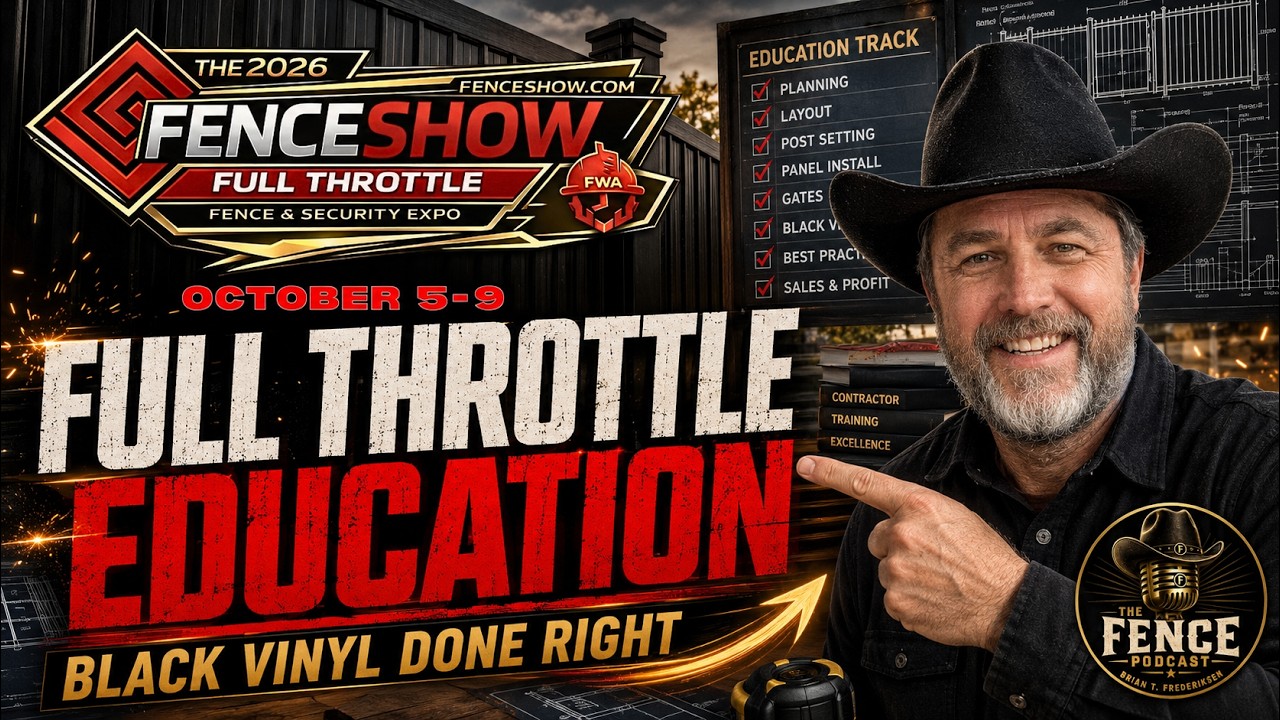
The episode focused on the Fence Show’s new “Full Throttle” education program and why Brian Frederiksen, Veronica, Sasha, and guest instructor Zach Romero believe contractors should invest in their future instead of just spending on the usual Las Vegas experience. Veronica explained that the 2026 program was built from real industry frustrations and needs, with structured tracks covering gate operators, customer sales training, bridging sales and operations, small-business financial basics, and commercial bidding. She emphasized that the goal is to provide practical, usable education that helps attendees improve their businesses long after the event ends. Zach shared his background in manufacturing and the vinyl fence industry, along with Black Line HHP’s 20-year focus on black vinyl products. He discussed the challenges of black vinyl performance, how quality varies by wall thickness, material type, and installation method, and why education matters for both contractors and suppliers. The group also highlighted the new instructor voting system, the value of networking and return on investment, and the show’s broader mission: making the fence industry more accessible, better trained, and more professional through hands-on learning and community support.
Full Throttle: Invest in Your Future 📱
In this episode of The Fence Podcast, Brian T. Frederiksen talks with Zach Romero of Blackline HHP and Veronica from FWA about the upcoming “Full Throttle” education program tied to the Fence Show. The conversation centers on why the industry should invest in training, networking, and professional growth rather than treating Las Vegas as only a place to spend money. Veronica explains that the program was built from years of hands-on construction and fence-industry experience, with multiple learning tracks covering gate operators, sales, operations, post-to-profits, and commercial bidding. She emphasizes that the goal is to deliver practical, real-world education that attendees can apply immediately and continue accessing later through Fence University. Zach shares his path from aerospace and manufacturing into the fence industry, describing how he became passionate about black vinyl fencing and eventually part-owner of Blackline. He discusses what makes vinyl quality matter, including wall thickness, virgin versus recycled material, extrusion methods, and proper installation practices. The episode also introduces the new instructor voting system at fenceshow.com, where attendees can recognize their favorite educators and exhibitors. Overall, the discussion highlights education, community support, and the long-term ROI of showing up, learning, and contributing to the fence industry.

Building Better Fence Companies Through Leadership, Accountability, and Systems
In this episode of The Fence Podcast, Brian T. Frederiksen speaks with Michael of Purple Coaching and Consulting about how leadership, accountability, and systems can strengthen fence companies and other service businesses. Michael explains that Purple Coaching grew through strong branding, strategic thinking, and a clear identity tied to the color purple, which now stands out across the fence industry and beyond. He describes Purple’s role as a flexible coaching and consulting business that works with clients in different ways, from tactical “fly and fix” problem-solving to longer-term leadership development, with an emphasis on matching the right approach to the right client. The conversation focuses heavily on what is holding many small businesses back: COVID-era expectations, weak bookkeeping, and a lack of proactive sales and marketing. Michael argues that many owners are still operating with unrealistic assumptions about demand and productivity, while neglecting basics like clean financial records, crew-leader decision-making, and consistent customer service. He also previews his upcoming Fence Show education sessions, which will cover processes, accountability, communication, administration, and commercial bidding. Throughout, the discussion emphasizes that the fence industry is unusually collaborative and that current business leaders have a real opportunity to shape its future standards and best practices.

Private Planrooms - A Game Changer for Bidding Projects
In this episode of The Fence Podcast, Brian T. Frederiksen speaks with Jordan from Construction Notebook about how private planrooms can help fence, gate, and other trade contractors find and win more work. Jordan explains that Construction Notebook is a long-running Nevada planroom that started in 1953 and evolved from a corkboard and printed notebook into a fully digital project database and weekly digital publication. The service gathers project information from public agencies and private developers, making it easier for contractors to search for fencing-related opportunities, view bid dates, track projects, and receive daily email bulletins with upcoming bids, pre-bids, site visits, and addenda. The conversation also covers how smaller contractors can use the platform to grow their businesses by identifying relevant projects, reviewing plans and specifications, and staying informed about changes. Jordan emphasizes that the service does not submit bids for users; instead, it provides the tools, contacts, bid lists, and tracking features needed to pursue projects correctly. He also notes the value of the local Nevada-focused support team, the affordable subscription tiers, and the importance of reading plans carefully before bidding. Brian closes by encouraging listeners interested in commercial fencing to attend the Fence Show commercial bidding class and try the free trial at Construction Notebook.