Stop Sending Out Trucks That Aren't Making Money
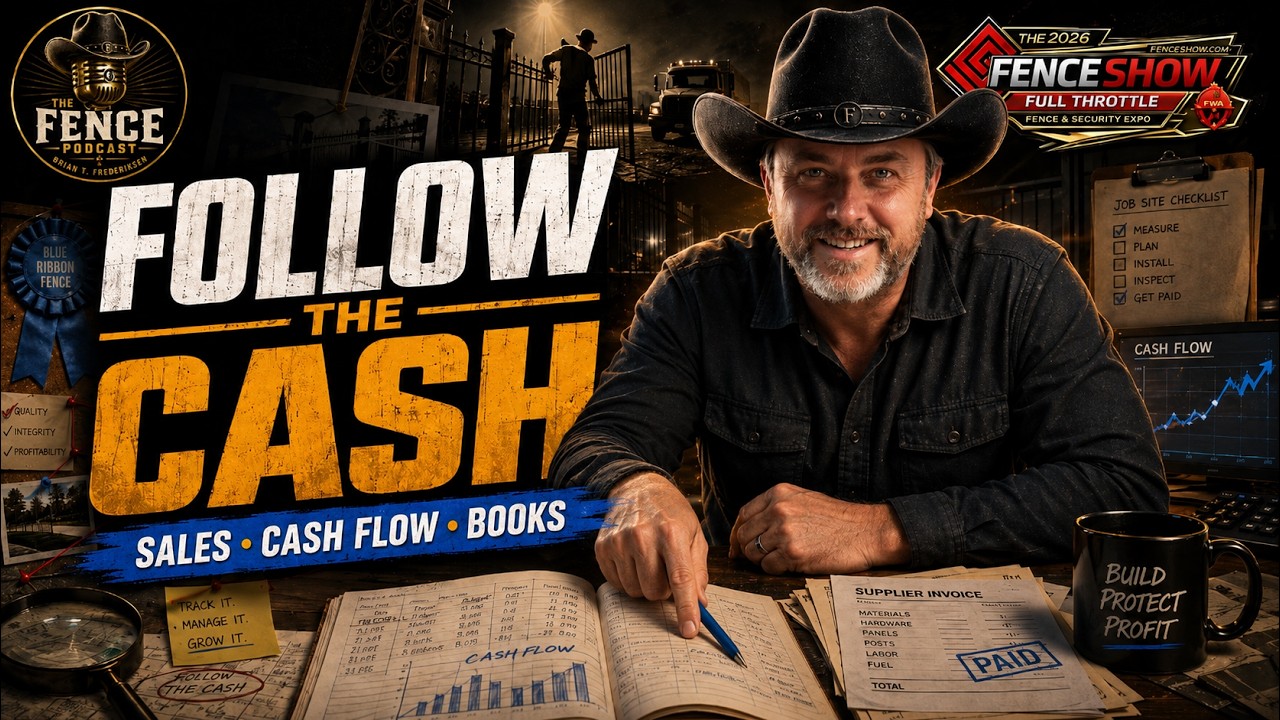
In “Stop Sending Out Trucks That Aren’t Making Money,” Brian T. Frederiksen sits down with Jeremiah to tackle one of the fencing industry’s hardest truths: busy crews do not automatically mean profitable crews. Jeremiah, now working with Secure Tech Fence Systems in San Jose, shares how commercial and public works contractors often lose margin through low-bid work, rising labor and fuel costs, poor production tracking, and hidden extras like submittals, CAD drawings, engineering revisions, and third-party inspections. The conversation makes a strong case for pricing based on real-world productivity, not outdated assumptions or the fear of losing work. The discussion also drills into the systems that keep a company profitable. Jeremiah and Brian stress the need for better coordination, clear accountability, and pre-job checklists so crews show up with the right materials, drawings, and expectations. They talk through the common mistakes that lead to return trips, missed hardware, and wasted hours, then connect those mistakes to larger business problems like underpricing gates, failing to ramp down overhead, and pricing jobs just to keep trucks moving. Listeners will come away with practical reminders on how to improve crew performance, protect margins, and bid more confidently in commercial fencing.
Topics Discussed
Chapters & Key Moments
Full Transcript
(11,885 words)Hey,
Hey.
All right, everybody. Uh, today's the new time. If you didn't tune in last week, uh, we are actually now on Thursdays at 3 p.m. Pacific time. As I always say, the only time zone in the country is, [snorts] uh, Pacific time, so tune in. But uh we got Jeremiah on here today. Jeremiah, thanks for coming on, man. Yeah, always a pleasure. But I do want to take a moment uh everybody might notice that Sasha is not on here with us. Um he is up at a funeral for Barry Mars. So um want to take a moment shout out for there's a loss to the industry. Um, I know I only met Barry Mars a few times, but it was always a good conversation and some of you know him from his time at Master Halco and then SCS and some other ventures that he's had in the industry, but he was a strong influence over uh the decades and many many decades. So, um, just do a shout out to everybody and uh feel uh feel bad for his family and everybody that the loss. So, awesome. Um, appreciate everybody being here today. Uh, Jeremiah, what's going on, man? just selling fences. Selling fences, teaching teaching fences. Um, yeah, Barry Mars is a legend and he'll be missed for sure. I wanted to add that. Yeah, he was, you know, he was a Las Vegas uh local, too. I mean, for very first time I met him, he came into my office. I know that he was from Vegas. Yeah, I I believe that was where his main um home was. If he had multiple, I don't know, but uh he definitely lived in Las Vegas most of the time. So, um that's what you know we'd see him at the fence show and stuff um you know normally when we had that event and then um he'd either have a booth or he'd at least be walking it um because it's in his hometown. But yeah, so he was uh it's going to be a loss for sure. Yeah, definitely. Definitely. Yeah. So, I'm uh just kind of recently accepted a new position. So, um just still doing the same thing though, selling fences, you know. Are we sure this is Jeremiah or is this his twin brother? We don't even know, right? Yeah. You'll never really You'll never really know. So, we might switch in the middle. You You'd be surprised. All of a sudden, there's a glitch and then it's not really a glitch. Exactly. Exactly. We We have switched places before, so Yeah. No, definitely. So, you've got some new stuff going on since I saw you um saw you last. Oh, yeah. Yeah, definitely. So, what's happening with that? Where you working? I'm at Secure Tech Fence here in San Jose, California. And uh yeah, I was just looking for um more of a like you kill what you eat type of vibe. Or what is it? You eat what you kill, not kill. I had that flip. Sorry. Yeah. It's already dead. It's a little easier. So, yeah, I'm with you. That's my style, you know. I got that knife and that fork and I'm taking it out. You know what I'm saying? Yeah. Sometimes you want the carrot and the stick, you know, just, you know, all stick and no carrot makes makes me sad, you know. So, you said secure. What is it the name of the the company? It's called Secure Tech Fence Systems. Yeah, that sounds like some high-tech stuff. What are you doing stuff for NASA or something? I've signed an NDA, so we'll leave that. We'll leave that out. But yeah, there's a lot of Yeah. Yeah. Well, there's a lot of high-end clientele here in the Bay Area. So, Yeah, we do a lot of work for for Apple and Google and Netflix. I'm bidding one right now for Pinterest. So, yeah, there's all kinds of different uh projects, you know, sec uh in my previous position, we were doing a lot of campus fencing, but it was we were doing schools. Yep. And now when they say campus fencing, it's like, you know, headquarter campuses of these tech these tech companies. And I'm like, oh, different kind of campus, but still, you know, still just as important. So, Yeah. Yeah. And you know a little bit about bidding. Uh, what were you doing last year at the fence show? You were doing some training, right?
Yeah. Yeah. We were teaching about the the government public works side of contracting and bidding and some of those uh red flags and some of the things that you need to make sure you have covered and included and bid bonds, performance bonds, payment bonds, you know, all the fun stuff. Yeah. And I think that's why we were excited. I know we we were reaching out and we always stay in touch anyway, but um you know, to have you come back uh to the full throttle experience. This year is completely different even than last year. So if you've been any of them, uh we're really ramping things up and you're doing multiple classes this time like running a crew that you know that's productive and all the way into uh advanced pricing strategies which falls right in line with what you do every day, right? Yeah, exactly. Yeah, I'm looking forward to it. It's always a pleasure. And uh yeah, there's just so much that's going on in the industry. Um, well, you and me were old enough to remember when we used to uh go you'd have to go to a plan room and do a takeoff. And it's like we're the now it's like you have everything on a device in your hand. It's it's uh the industry is constantly changing with technology and systems and software and um if you're not changing as a business owner, then you're getting left behind whether you know it or not. You know, do you remember or whoever is listening remember when it went I mean we all started with the rulers, the scale rulers. I mean that they just you know three-sided flipping I still got it. Yeah, I still got mine. What do you remember when it went to uh uh it went to that remember that digital one that came in the little bag and you could roll it? I have one of those, too. And oh my god, was that not a life changer? I mean, we were literally at people's contractors. We were we had to go over to the GC's office or or like dodge plan rooms or wherever they had at the time and y we were thought we were so cool showing up with our it was a bag about that long, right? You probably still you set the scale and you could roll it. Yeah, I still have I still have that and uh and it really helped with the radius sections. Yeah. You know, because you could you could use the ruler, but if you got a radius or something like that, you pull out that little thing, boom. No, that the industry's changed a lot. The bidding process has changed a lot. And um you can really do a bid in half the time if you have the right software and the right. And now you got stuff like um I know that was that Blue Beam people use. He's got some Paulo um um Arc Site Vince Cloud. Um yeah, there's so much there's so much technology uh in our industry that's just changed the game. Yeah. Yeah. And a lot of that software you guys going to be able to see up the some of this stuff at the fence show. So definitely if you're interested in get looking at some software if you're thinking about getting into uh commercial bidding um and my what I consider commercial bidding isn't necessarily just general contractors and blueprint stuff. I you know we do nothing but commercial and industrial and we don't do a lot with general contractors per se. It's you know we bid some of them but we don't do as much. It's mainly we could consider commercial anybody that's just not a residential property. Absolutely. Absolutely. You can do commercial without necessarily having to go out and you know stare at blueprints all day. It depends on what your um you know what you're what what kind of business you're trying to get. So I'm that's what I think that's what's cool about these shows and about guys like you coming out there is they get to hear from um guys like us that that bid you know certain types of project guys like you and then there's people out there that only bid public works jobs. I mean it's it's amazing. You can be sitting down at a bar or something and start chitchatting with somebody and they're you know they're bidding this entire kind of fence that that you're like going, "Man, I wish I could learn how to do that." And they're like, "Man, I wish I could
Learn how to do residential fence." Right? Yeah. Yeah. Yeah. And I I shared this pre-show, but I'll share it during the show. Um me and my me and my my twin brother, we're both working for people that we've met at defense shows. So I know you're saying that. That's that's incredible to think about that. Like I'm go to a show, meet a guy, you have dinner, and then six months later, a year later, you're working for that guy, you know? So it's like it's just amazing. You never know the opportunities that you're going to have at these shows and the people that you're going to meet, the relationships you'll get established. So, it's great for you guys to have this show. Yeah. And it's awesome. I mean, that's it to see it and hear it and hear about people. I mean, we and we we do our best to try to get people that have either never been to a show as well. So, it's not just I love to meet up with my buddies and and hang out. And it's it's it's cool to go to the shows and see everybody you know. I mean, that that is one of the benefits and of getting to go. you can see people you you talk to on the phone all year sometimes and you only see once a year at one of these events or twice a year and it's really cool to see people at the show but you want to make those new contacts too because if if if you don't if you're out there shaking hands and and I think I think that's what we focus on a lot too is making sure that there's an environment that is conducive to you actually meeting people and getting them together and and uh you know and and making it tighter and a more of a more of an open uh feeling where you just feel comfortable enough to chitchat. Yeah. Oh, absolutely. The team building that can happen and you know mentorship type of things that can happen is is really beneficial at the shows. Yeah. What did you um I besides got your job. I was gonna say what did you get out of the last show? But now we know, right? You got a you got a job, right? Yeah, pretty much. Yeah, pretty much. Um you're my you're my you're my next poster we're putting up. It's gonna be a picture of you and your brother or going we got a job. Yeah, exactly. Yeah. No more no more unemployment for me. We may not make as much money as we used to make when we were unemployment, but Yeah, exactly. We get to pay half in taxes. Yay. Up every morning, right? Yeah. I'm from California, so you Yeah, you It's ridiculous. Yeah, it is what it is. I wanted to talk a little bit while I got you on here. Um because I mean a lot of companies are busy. I mean, you know, it defense industry, you you I believe you decide whether you're busy or not. I I honestly believe that. I mean, you can slow your company down or you can pick it up anytime you want depending on what you put into it. But, um, a lot of companies are busy, but, you know, are they are they actually productive and profitable? You know, what do you think? Yeah. See, that's the thing. Um, just from from what I've seen uh in the government public works, it's low bid wins no matter what. And so a lot of times you're you're bidding so competitively that you're not really uh figuring the profit in, I guess. So sometimes these private warehouse type jobs or something like that, you're going to make way more money than you would fencing a whole school and you'll have half the headaches because you got one or two automated gates. you know, you you're not worried about students or leaving holes open, which you want to leave holes open either way, but you're you don't have 150 kids trampling through your construction area. So yeah, the commercial market, um, a lot of people that are staying busy, especially in in Bay Area or in California, they're just under bidding so many jobs that it's like, whoa, you know, you can't afford to give your guys raises and, you know, some certain things are just not happening for your company. So, one of the things that my new company that I'm with now, we we um [snorts] we pride ourselves on um providing the customer with uh the design services and we're we're the industry professionals. So, we kind of lead them in the right direction of once we get what they're looking for. and um and we use our relationships to, you know, work with the regular customer base and and uh make sure we give them the the best service possible. So, yeah, but the low the low bid model is
Just such a race. It's a race to the top because you're raising your revenue, but it's a race to the bottom ultimately, you know. I mean, you think it was always there though, the the race to the bottom or has it gotten I mean, do you see a different pattern? Is it do you think that uh um you know complacency has kicked in more or there's more order takers slash not as many on the sales salespeople side or what you know I mean do you think do you think it's worse now than it was? Well, what well I think it I think it's a compounding problem because um you know you're there's a huge labor shortage of people in the industry in the office and the field that actually have the industry knowledge to even install the fence or the gate or the gate operator correctly. And so I feel like a lot of times these companies are bidding uh a production and then that when they when they go do the project, they're not getting that production that they're bidding it for. So then it's like a catch 22. Well, we were the low bid, but instead of making 50,000, we made 40,000 or 30,000, you know, because of the labor overages and stuff. And and it's hard to keep good people. Let's be honest, you know, with inflation over the last few years and you know, postcoid material prices are kind of stabilizing, but a lot of people are struggling with that, you know, just trying to keep trying to keep things going and remain profitable. So, yeah, that's interesting. What you're saying is, I mean, are we really under bidding or are we just getting less productive? You know what I mean? I mean, did we have crews that were installing 300 feet? I mean, obviously I say 300 feet just as a number. Um, depends on where you're at. One guy can, you know, one crew in one part of the city or can build 300 feet of fence and digging harder somewhere else. It's 200, right? But yeah, for sure. Was one crew um building 300 feet of fence and then all of a sudden we were still bidding it as assuming that that, you know, truck got that much done and now they're just less productive. So, we didn't raise our price because of that. So, did we, you know, are we under bidding it or are we just not raising it to compensate for production? I think that was one that's one of the key things is that people aren't raising it enough for for the lack thereof of production. You know, uh a lot of times uh like I say in the government public works bidding space, it's uh it's a low bid thing. So, it's like man, you're you're really having to pinch the numbers and stuff and with fuel costs, you know. Uh I I still don't understand why. I was in Carson City, Nevada a couple of days ago and I paid $450 a gallon for fuel and then I come down back to California and I'm paying six $6. $6 for fuel. I'm like, what the heck is going on? But just imagine you have 10 trucks and you're paying $6 for fuel. It's like, oh geez. you know that the cost of inflation with this war or whatever politics are going on it it's it's unimaginable and so everybody's trying to stabilize things even though price are rising for every single thing so we're seeing it you know go ahead I drive that Ram 2500 truck and it's like $2 or something to fill it up and getting really bad cuz I go down California a lot, right? So, I'm down there and it's like six bucks, seven bucks a gallon to fill it up. So, you can't even I mean, some stations won't even let you fill it up without having to restart it because the credit cards shut off at like 150 or 200, right? Then you got back in again and reauthorize it to go over the amount. But, um I I actually went out and got a Toyota Camry and I never thought I would go from a truck and I and I so I have my truck still, right? Because I want to be able to pull my boat and all the normal stuff, right? And uh so I didn't get rid of my truck. So, I still have that. Bought a Toyota Camry 47 miles to the gallon. Wow. I thought I wouldn't drive it and now I'm driving it and it's like uh 10 gallons. It's like 50 bucks to fill it up and I get like 600 mile gallon or 600 miles out of it or something. That That's incredible. Yeah, it's those little cars you can The thing I like I drive a big V8 Tundra. The last year
They made the V8 was 2021, so I have the 21 Tundra. But yeah, those little cars are nice because you can just zip around traffic, too. Zipping in, zipping out. Oh, 320. Oh, in Louisiana. Are you kidding me? I'm pretty sure Susan commented that and then pulled the comment up herself. So, yeah. Like, what the heck? That's like liking your own photo, right? You know, after you posted it. I'm guilty. I'm guilty. I'm guilty of doing that. I'm guilty of doing that. Susan's like, "I love that comment so much that I'm just going to put it up on the screen." I'm like, that she's the one that did the comment. So, they're paying half for gas in Louisiana. But see, the fence the fence job in Louisiana is going to be about 25,000. In California, it's going to be 50. You know, in Vegas, it's probably going to be 40, you know. Well, and it's half the price in Louisiana. Probably because the power's on half the time. So, it's, you know, I I've never been to Louisiana, so I wouldn't know. Yeah. You got to go through when there's when all the utilities are on and the stop lights are working and stuff, right? Yeah. It's like every other day there's some storms going up. Exactly. Yeah. Exactly. Exactly. the uh running a crew was interesting because uh I you know I haven't thought about that angle that you were saying about how um we're not compensating for the production loss that we have opposed to three, four, five years ago. And if I'm looking at it, you're absolutely right. I mean even I think some of my old numbers are based off of uh you know honestly I don't know 150 ft one two guys one truck can do. and chain link and maybe 80 ft of iron, you know, digging and setting. We, you know, we do all dig and set. So, um maybe uh maybe even I need to go back and revisit. I mean, are they still producing what they're supposed to be producing, right? Yeah. You almost have to audit, you know, take a five a handful of jobs. Oh gosh. Take a handful of Everything is within like a mile and a half of her house and it's like there's like four stores. So, I mean, how much gas can she use, you know? Yeah. Exactly. Exactly. Like if it's snowing or something, you can never go anywhere. So I don't know why they give them such cheap gas. There should be like 12 and they still wouldn't spend much money in gas. It wouldn't matter in Wyoming. Yeah. Exactly. No, the pl the places that are getting the gas money are the California. It's just ridiculous that you know when you need the cheaper gas, Yeah. You would think, right? you you would think, but it is what it is. You almost have to pick a handful of jobs and audit them to be sure that you're bidding for the right productivity, you know, and and a lot of a lot of jobs that we do are so custom that, you know, you're you're it's hard to figure that way, you know, when I think ours are too. It's a lot of smaller jobs inside the hotels and casinos and it's like how do you put you know even the 150th foot 150 ft in a day. How do you put that on when one day it's just four gates on four different floors and it took you the whole day because you had to go through you know security the loading docks get up and through the back of house and still in a whole day. So it's like it's really hard. you're just basically still, hey, I think this is going to take a day. And if for any reason one of the property um you know, one of the property people couldn't get you access to a room or something, you might be going back the next day. Or if there's a hot work, you deal with hot works stuff, you've got, you know, and you're you're you're not you're thinking you're going to get out of there and the guys didn't actually they got the hotworks permit, but they didn't actually start cutting or welding until like three in the afternoon. You're like, man, you guys, by the time you get done, you still have to sit there on watch for the next three hours, Yeah. We try to avoid that at every cost. We just did a we just did a fencing up in San Francisco like on the 50th floor of one of those skyscrapers and uh we we fabricate everything here and we just want to go there, drill a couple holes, anchor things down and be on our way. Yeah. We're we're dealing with a lot of the same things with docks and elevators big city problems, right? Yeah. Yeah. We do a lot in the casinos
And every once in a while somebody will get one and they were just like super cheap and then you know we're bidding like three days and they they bid a day and a half or a day and I'm like and it's their first time working inside of one of those properties where they don't realize that they're going to get there and they can't park and they can't unload their they got to unload onto a cart and try to get and then go figure out where to park their car and get through security get badged. Maybe they're not badged for the property. Oh yeah, there's there's two hours of your morning right there and then they end up losing and then the next one they're they're back in line with you. Yeah, that's that's a fact, man. We we do a lot of u private campus work where we got to get badge and get through security and it's it's hours every day sometimes, you know, just trying to get on to the site. yeah. But once you once you learn I mean once you learn that your way around back of house at one of these facilities, whether it's a school, whether it's a hospital, I mean there basically it's all the same. if it's a hospital, if it's a um you know, if it's one of the casinos, one of those places with a big back of house once you get in and you got badged and uh it's worth it because now you know the property and they they don't want to deal with someone new. They don't want to have to go out and try to help some new contractor figure out where to park. Um you know, and and they really don't want you losing lo they just want to call somebody and they want to get it done and they want to know that your guys are already bad. They don't want to go meet your crews in the badging department, then go down to the parking garage and tell you where to park. I mean, a lot of work. Yeah. Well, you're 100% right. Sometimes jumping all the hoops, jumping through all the hoops is worth it because then you're their guy and you got a return customer and they know that you know how to get in. They know that you know where to park. They know that you you have their system their system down. Yeah. So some department head boss called them and said, "You better get this done by the end of the week." They're like, "Man, I can't risk hiring a new guy." Exactly. It's like, "Oh, I got a price that's $1,000 cheaper, but you know what? Just go do it." You I got to get it done. I don't want to get in trouble. Yeah. Yeah. Let's talk about your running that you're going to be doing this uh talking about running a crew um that produces which is I think a huge huge thing. I mean we hear we watch a lot of videos. We have everybody on these all these um podcasts and all these videos saying this is how you build fence quick. This is what you do and all that. But but just building quick doesn't mean you have a productive crew, right? So um what's the biggest what's the biggest reasons um crews underperform that you can think of? I know I'm going to catch you on the spot here. I didn't preload these questions for you, but um what do you think the the biggest reason crews underperform? You know, I think a lot of the problems that we've ran into is from coordination. If if they don't have the right materials, if they don't have the right approved shop drawings and so or if the if the customer doesn't have the the prop the proper alignment staked or anything like that. Those are a lot of the things that have really tied us up in the past of just not having the proper communication channels, knowing who's the on-site contact, what are the on-site requirements, things like that can just eat away the time when they should be building fence, but they're checking in with so and so because, you know, they called someone else, they didn't have the right contact information. a lot of uh coordination, you know, making sure that they have the approved shop drawings, the correct materials, all that stuff ahead of time is a big uh time waster, you know, as far as that goes. Cuz and you you'd be surprised because I've seen it a million times, you know, guys show up on the job, they're not sure who to talk to, defense might have, you know, stuff in the way or maybe it's just not staked out properly or uh there's all kinds of things like that that'll tie you up. So without giving away too much, but having that proper coordination, you know, nowadays we all have iPads, we all have iPhones. There's no reason why you
Shouldn't be able to have access to the correct information when you're going out to build a fence. So that's that's one of the big red flags that I've seen that's really affected the productivity of uh the companies. Yeah. And I think with us with the cruise, the second we stray away from procedures, man, the second I mean it's and and everybody sometimes thinks those procedures that you as a business owner come up with over the decades you're doing it, it seems silly, right? It seems silly to have a checklist that says, "Hey, uh when they pull when they're pulling out of the yard, they stop and you look at the gate and you make sure a sign's on the gate." And that's because, you know, you've had too many jobs where the crews forgot to put a sign at all on the project. Right. So this guarantees and for us that guarantees there's at least one sign on the job. Yeah. 100%. make a sign on the gate and you know that gate that sign is there. you're hoping they put one in the corner and you're, you know, strategically where you try to, you know, guide them on and do it. And then even then we have a question that, you know, we check the gates. Did you, did you measure the gate itself? You, you know, the work order would typically say what the posts were set at, right? And, you know, the day before or whatever it is, it'll say, you know, 39 and a half inches, whatever the opening is. And did you measure the gate or did you just grab the one that that was labeled for that customer and without measuring it? And then did you grab the the hardware? Right. and check. You've got a pin hinge. This pin hinge may have only cost us $2 for this side, $3 for this side and and for the gate and the male and the female side. And then um you know you and then we even have them. Did you check to make sure one of one part's not for 58 and one part of the the pin isn't for half inch, right? And then it's not going to work when you get out there. So these silly little things that if we don't run through in the morning as they're leaving, you now have a non-productive crew because they need to be somewhere the next day at the end of the and they don't never notice this stuff that the forklatch is wrong or something like this until the end of the day. And now you've got a crew going back out for $3 worth of parts the next day and what would have taken them 10 minutes is now three hours, right? And it's 100%. Yeah. Yeah. The difference between making money or losing money. So I love that. Yeah. you you kind of have a lot of similar mentality when it comes to that. So, I'll tell you what I had uh down for this. I was just curious what you were gonna say, which is similar to what you had. Lack of systems, right? Okay. Noility. If we don't no accountability, if we don't tell these crews, um this job has to be done today. And and then when they come back and say, "Oh man, I still got something." If you don't question it and say, "Look, man, what's the real reason you didn't finish that today?" Right? What's the real I mean, you go to find out it's because they didn't they only brought one rock bar when they needed three, right, when they're digging or they didn't have they didn't have the they didn't have the half inch bit for the hammer drill. So, they got to go back and bolt that post down tomorrow and they're just leaving the fact out that those little facts out. And I so I think no accountability, poor prep um before the crew leaves the shop, which is goes back to what I said, you know, prepping it and communication breakdowns. Uh which kind of what you were saying, there's no reason to get to the job site and not know what you're doing, especially with technology now. Yeah. Yeah. Well, I like somebody commented that if if you're getting phone calls from the field, which we've all gotten, that you have broken systems and and that's a fact, man, because but it happens. It still happens, you know, sometimes. Yeah. Who was that? Veronica. That was Veronica. So, she says, "If your phone is Yeah. If your phone is blowing up from the guys in the field, um, your internal system is broken." And you're always going to get some calls. There's going to be something that happens out there. But if every single day you your first calls in the morning by 8, nine o'clock is a is a couple of your crews and you've only got three going out.
Two of them are missed an extension cord. The other one didn't bring the latch. the other one is missing one post and and you know they didn't bring the slats or whatever it is then yeah she's right there's something uh there's something broken. Well, and I like what you said about accountability because I've seen it firsthand the no accountability thing at work in some of my previous uh employers and it was like there's no accountability and it didn't matter, you know. Oh, we'll send it back tomorrow. Oh, we'll send him back tomorrow. Oh, we'll send him back tomorrow. Well, wait. How come we didn't make as much profit this year? It's like, well, you got that attitude of I'll send him back tomorrow. You're basically writing a blank check to give good service when you really just don't have the right systems and the right accountability in place. So, that's that's a big thing is having the accountability uh in the field and in the office. And that starts when you hire them because you know if you were to look at our our handbook and stuff that everybody signs um you know when they're hired on everything from the driving policies to the the alcohol cigarettes I mean all those little those policies got added in even being on your phone in front of the customers things like this right um we actually put in there that you're going to be available 6 am to 6 pm if we need you know we put it in right now we're not obviously going to work everybody 12 hours a day and sometimes you start a little early but sometimes it's seven you know But um 6:00 a.m. to 6 p.m. because if you got an hour left to do a job and then we try to we try I mean the policy is to to check in with them by noon and then again at 2, you know, otherwise, you know, they want to be back by 3, 2:33 and you ask them where they're at and you you you need to be able to make a call. Hey, um I'm going to need you to stay the extra hour or two to finish this job and they're supposed to be available and quickly what'll happen is they'll be like, "Man, I can't I got a haircut appointment at 4. Oh, I got to I got to do this. Got to pick my kids up. I got to do this. I got to do And I'm like, man, that's not what we agreed to. You agreed to be available. Now, if you double booked yourself with a haircut, right? Then I don't know what to tell you. Okay. But your first your first booking and your first commitment was to me till 6 if I need you and occasionally on the weekends. Now, now I haven't asked you to do this in three months, Yeah. Yeah. Yeah. I'm not going to be the bad guy here, Yeah. Yeah. So accountability comes in and then you better have a system in place to say, "Look, um, I'm sorry that you made this appointment. You were planning on going somewhere at 3:00 in the afternoon, but you you agreed to work for me till 6 if I need you, and I need you, and I haven't asked you in three months." So, if you don't do this, there's going to be a write up in your file. And you know, you can if you want to continue to make appointments at four or five o'clock in the afternoon, that's fine. But just know that those appointments might get cancelled. That's the commitment you made to us. Yeah. Exactly. Yeah. Exactly. Yeah. So accountability, this is where Sasha, we had a question for Sasha. So I'm going to put this is going to be Sasha since I'm assuming because you know from Australia and his crocodile Dundy. So Sasha would say, right? So I brought Sasha with us anyway. But so um Sasha would be like, "Hey, what separates a solid crew from a crew that struggles?" Probably all the stuff we just talked about, but what what what's one thing that that uh stands out? Oh man, I I would say either dedication or accountability, Just having having someone who's dialed in versus having someone who's just there to get it checked. You know, that makes a big difference. That makes a huge difference. Yeah. Yeah. So, that was just that was a horrible question, Sasha. I don't know what he just did. You know, I don't know why he even came. I like that question. Yeah. No. No. I like I like the crocs. Yeah, I like the croc. I'm a bullfrog myself. More I'm a more of a bullfrog guy myself. You know, Jeremiah the bullfrog. I think I think you know people keep leaving these alligators everywhere
Around and it's and I'm not necessarily uh I'm not necessarily afraid of I don't want to go near one because I mean I don't want to get eaten but I think people are a little bit nuts when I see them just kind of g hanging out around the water in Florida or something and as if it's like no big deal, you know, and they're just kayaking out there and there's these alligators driving around. I mean, it's just nuts. But I just think that's a little crazy. But, um, I'm not necessarily, but people keep bringing these alligators and stuff everywhere I go and like putting them on the desk and putting them everywhere. Um, so I've got to I got to break that. I guess I'm gonna have to go do some crocodile wrestling or something just to prove every Oh, no. You Yeah, you can do it. I'll pass. I'll pass on that one for sure. For sure. We had one at demo days uh swimming around in the pond, you know, at the demo days one in Florida. So, uh, I guess he was a baby one, but big enough. if I don't want nothing to do with it. Yeah. No, that's uh that's crazy. Though sharks and alligators, they freak me out a little bit. You know, I'll stay out of the ocean. That's fine with me. You I like sharks more than alligators. I don't know what it is, man. I think a shark just chews you up real quick. An alligator just tortures you and buries you under a rock or something. It sounds worse. No. No to both. No to both, for sure. Hey, but you've got um you've got not just that. I know we kind of went through that, you know, running a crew and stuff. You've got advanced pricing strategies coming up and, you know, and people focus, they just focus a lot on getting the job, kind of what we were talking about, and they forget to make money on the job. Um, and and I'm glad we talked about underpricing. So, I think underpricing is not just throwing a, you know, a cheap price at it. It could, you may not have low ball. You just didn't know what your actual production numbers are of your cruise. 100%. Yep. 100%. and and it sounds like you're going to be going into some of that and talking about racing to the bottom um pricing based off of fear. Tell me about that. Yeah, for me I feel like a lot of companies are more concerned to keep the guys busy. Oh, I got to keep my guys busy. Oh, I got to keep my guys busy. But if you're sending out a truck and it's not bringing in back the right return, it's like uh that's kind of, you know, you're you're pricing it out of fear because you got to keep this guy busy. Uh, and you got to keep your backlog going. And it's always about the backlog and keep my, you know, I got to keep all my guys busy, but it's like, well, if you're sending out that crew and you're not making the right amount of profit, then the whole company's going to suffer, you know. So, that's kind of the bottom line there. And I think I get stuck in that. We all do. We're always um m there's there's all kinds of different fear. There's the fear, how are you going to keep your guys busy? And there's this fear that if I get rid of these guys and I got these jobs that you've always got, we've always got 10 customers that have promised us this job, these big jobs, these these $100,000 jobs, $80,000 jobs, these quart million dollar job. Maybe it's a $2 million job. We've all got these jobs that everybody says we got that we think are coming in the next two weeks to a month or right. I mean, whatever it is. So you're afraid you're and being that it is tough to find people, you're afraid out of fear of letting these people you do have go even though you don't have any work from them because you're like what am I going to do when I sell these jobs? I'm not going to have anybody to do the installation if you start uh ramping it down and uh you know do you think that fear is is uh is out there? You think it's uh justified? Oh, I mean for sure. I mean, for sure that's a part of what's what was going on, but you just never know what the future holds, you know, and you can't until you have the materials, all the proof submitts, the contract in place, you can't really bet on it, I guess you'd say, you know, you got to make sure you have all your ducks in a row before you're promising people that you're going to keep them busy for three weeks or whatever on certain jobs. Yeah. And in the yard, what's funny is they all they want their hours. I
Remember we've had guys before they were like working, you know, they're always calling off and they're only I'm looking at the checks and I'm like, man, it's been six months and this guy's never got more than 32 hours and and it's always some reason leaving early or he's always back the first one back and so it's two an hour and a half off this day, two hours off this day, or maybe missing a day only. It probably hasn't had one week where he's worked 40 hours. So I'm like, "Hey man, how about we just give you Fridays off. Pick a day. That way you're never feeling like you're in trouble. You're not having to call off. We'll just give you we'll schedule you 32." I can't do that, man. I got to have 40 hours. I'm like, "But you haven't worked 40 hours in six months, so can we just schedule you to 32?" Well, I can't do that. I'll have to find another job. I go, "You're gonna have to find another job if I continue to give you the hours you're doing now." Yeah. Go make sense out of that. So, you just want me to guarantee you 40 hours in case you need it ever, right? Well, he doesn't want to have to explain to his wife why he's working part-time, you know? If I could just get a raise, then I wouldn't, you know, that's really what I need. I'm not making enough money. No, you're just not working the full 40 hours plus the five hours of time it would give you. Yeah, that's that's a common thing for sure. Yeah. Yeah. Funny story. A few months back I come in and um there's this guy in the yard and he's just like cutting up scrap, you know, stuff that's getting ready to go into the recycle bin. I don't know if you've had recycle bins before, but we cut up all of our metal and stuff. that goes in your recycle bin and you basically it's it's it's it's one of those magic dumpsters where you throw like you know $5,000 worth of scrap in there and they give you like 30 bucks, you know, when you recycle it. Yeah. Yeah, we've had those. So, he's back there just cutting and cutting up and I'm in the front and I'm talking to everybody. I'm like, "Who is that guy?" And go to find out he's the he's you know, we hired him. We were really busy uh in the weld shop. Another guy in the weld shop and I'm like, "So, what's he doing? He's just back there cutting up scrap metal and and we we end up we're real good at and I don't know if this is a lot of companies do this. We're good at it. We ramp up, right? We're really good at ramping up when we when we're busy, but we're really bad at ramping down and Yes. You know, when when the work is a little slower. So, it's it's you think that's something that a lot of companies do? Yes, I I think it is. A lot of times people want to keep someone on the payroll from the busy season and maybe necessarily your overhead's not supporting that person anymore, but they keep them around anyways because for whatever reason, you know, and you're never going to have too many yard guys because the yard guys never going to say, "Hey, I need more to do. I I I can't, you know, I can't do without these three other guys." You know what I mean? Or whatever. Two other guys or whatever. So yeah, you're never going to have somebody say, "I don't need him." But that's kind of how it is sometimes. Yeah. And then of course that guy's not there no more. But um Yes, I got that. I'm like, "Well, I think it's time to let him go. If you hired him to do to build some gates when you had 30 gates to build and then those 30 gates are gone. Uh I'm sorry guys. You got to let you're really good at hiring." Like, "Well, you want us to do it?" I'm like, "Yeah, you hired him." I go, "You guys get rid of them." Yeah. You're like, "Hey, either our business stays open or this guy stays on the staff. You decide." His name is you guys. I'm like, "You guys got to go get rid of him." But right now, he's just behind the building cutting up scrap metal at 35 bucks an hour. I think it's Yeah. No, that's a common thing. Ramping up and then not ramping down. That's a very common thing. What do you think um going into the pricing? What do you think some and I because I know you bid a lot of specialty stuff and uh you know a lot of larger projects and and you've seen I'm sure some you've seen some crazy ones and you've seen some pretty consistent ones. What do you think though, but it's
Probably still the same. What do you think some hidden costs um that contractors are all, you know, often forget inside these bids? Well, I think I think that there's more to it than that. I I feel like um well for one of the costs I think is like the uh submittal process and the CAD drawings and then you know oh no we need engineering and those kind of things that you get caught into and it's like hey I didn't bid it like this redrawn this fence three different ways plus you want a layout plus you want you know an option for this and you want so now I'm doing six drawings when maybe we figured one or two and I'm paying a CAD guy 40 bucks an hour to do drawings And so I feel like uh doing the submitts and the CAD, I feel like that's one of the costs that a lot of people aren't accommodating for in their bids. and so that's that's some of the some of some of the uh shop time, you know, when you're loading unloading materials, you got to run over here, you know, an hour away, go pick some panels up from some perforated metal screen for the gates or something. then you got to bring it back or it needs to go to the powder coers or you know it's like all these little all these little nickel and dime nickel and dime nickel and dime. Next thing you know you're spending thousands of dollars that isn't getting captured in your proposal. So that that can definitely hit the bottom line hard. Uh the bigger the operation, the more money it's going to cost you. So that's one of the things I for us it's you know stuff you learn over the years is we have a lot of we don't have a ton. I mean, you could fit most my um conditions on the the homepage of the bid, basically. Um and it's the the major stuff, you know, that that we end up you you've got to have permits, engineering, things like this got to be out there. It's got to be outlined who's doing it. Even I think what a lot of people get caught on is they're like, "Hey, per bids and plans." I mean, I you'd have to be out of your mind to just throw a number and say per bids and plans. And I think it's a lazy way to bid something and you're almost going to get caught every time because you're basically agreed to all the all the revisions. You've agreed to everything. So, if you're going to bid something per business and plan, you're bidding to a specific, you know, I won't even bid to on a on a project like this this Safeway complex or whatever it is. Even if it just says a dumpster gate, I'll bid per page um F1, you know what I mean? Section three. That's what I not never just uh per bids and plans for this project because you know fencing as well as I do. I mean, you might have a section in landscaping, you might have some in civil, you might end up with some on on the site plan. I mean they there's no consistency on fencing and then you'll miss something if you do per bits and plans almost guarantee you know so little things like you know like that kind of that kind of gets us and then if you don't get the engineering thing um down I mean I you know we have in there hey price may change based off engineering so you bid it a certain way and I don't care if you've been building it that way your entire life and it's the way your father built it your grandfather built it and you've never had a f a fence fall over if you if you figured the engineering in and you bid it a certain way and You don't have something in there saying that you might have to revise your price based off the engineering. And this engineer comes back and says, "I want a two foot deep or two foot wide hole, 5 foot deep with with steel cages now around it." Oh, yeah. With And that's not uncommon to happen, right? And you were like, "Well, no, man. I went three feet one foot by three feet." I'm like, "Okay, well, they just went two foot by five with steel cages. So, you now just have an extra five grand in uh concrete and steel cages, and you may not be able to charge more for So, I think for me that's the kind of stuff that you got to really watch, you know, and make sure it doesn't come. And third party inspections, that's another one. You know what I mean? Sometimes that gets thrown on you. X-raying the floors. Oh, yeah. Just I could go on and on about that kind of stuff. So, you have to literally throw these little things in there. I mean, we we even have stuff about cracked concrete, landscaping damages. Um I mean, we would fix a sprinkler pipe, but my contract says I don't have
To, right? Yeah. 100%. Yeah. a curb that got broken. I mean, you know, if you don't have these little things in there, you got to go out there with a camera and video and take a video of all the sidewalks, all the curbs, every piece of concrete landscaping, and document every crack in the concrete, every crack in a curb, because guarantee you they're going to come back and say, "You did it. You had something to do with it, and you need to fix it." Oh, yeah. Well, and like you mentioned, the third party inspections earlier, we were talking about doing work at hospitals. Pretty much anytime you're working at a hospital, they have Oz pod inspectors and they want to inspect the material. They want to inspect it being welded. They want to inspect it being coated. It's like you got you got a whole lot of office time and coordination time just before you even get on the site. And a lot of times that time's not figured in the bid unless you did it correctly. So yeah, there's a lot of things. I had one one time that wanted to sit there and watch us blow out the dust out of the holes we drilled. And you're paying you're paying this guy while you was it going along a wall or something. I remember it was on a wall or a sidewalk on top of a wall and [snorts] you had to drill the holes and then he had to watch us blow to make sure we blew out the dust, you know, out of the hole before we put the anchor in. And then he's looking at the marks on the top of the anchor and he wanted to make sure we weren't cutting the anchors off, right? And he's charging you by the hour to stand out there uh while you're doing it. Well, he's luckily he's not charging you, but he's charging the city or the county or whoever it was. Yeah. I mean, sometimes you're on the hook for third party if if you're handling all the permits, inspections, and everything. So, yeah. Again, those are just stuff that we kind of, you know, we kind of watch out for. Um but, uh, you know, I What's that? We're getting the ring cam footage live. That's in That's in her backyard. That's kind of creepy. What is that? I don't What is that? Is that a bird or That's an alligator. She needs to move. I don't know what she's doing there, man. I have no freaking idea. And she's got her kid out swimming in the pool probably like 10 feet from that thing. You know what I mean? He's probably out there right now, Yeah. That's that I'll pass on that. That's in Louisiana. Yep. O. No, I want nothing to do with that, man. I would be I mean I carry I you know I carry up in Nevada already. I mean I'd be going out I'd have to have a gun to take the trash out. I'd be like looking underneath the car and it would just be I would never be comfortable, right? I would I'd have to stop wearing flip flops, you know? It would just be I'd be wearing boots all the time to protect my legs from Yeah, we're west coast guys for sure, Brian. We don't have bugs either, man. They got these giant bugs. Hey, uh but you know um but I want to get back on the pricing. Um, I think this is where I think a lot of people struggle too is um is is how do they confidently charge more or even get deposits and things like this? Yeah. Well, what one of the things that um we try to leverage off of our relationships so that the customer knows us, they've hired us before because I mean, if you've never done work for a contractor, you don't understand if they're going to schedule you appropriately or if they're going to have realistic expectations. But once you've done a few jobs with a contractor, you can leverage that relationship. And I'm not saying like charge them double, but you can charge them more and get away with it and they're not going to question things. And if you do a good job and you don't have a punch list because you did it right the first time, then you can do you can kind of you know build on your brand and your relationship and you can make a profit and you know a healthy profit. So that's one of our emphasis. Yeah. And I agree because um the way it works is they need to get the job done and there could be three other contractors behind you and there's a
Schedule they're trying to meet. There could be they could have even though you don't maybe they have liquidated damages maybe they got to get the job done by a certain time and and they didn't pass that on to you because hopefully if it was me I would have redlined the liquidated damages anyway for sure. So they want people they can trust because sometimes you might be holding up you know the entire pro the next phase of the project. So you can definitely um you know I want to say charge more. It's just you're charging for the confidence they have in you. So if you can go Yeah. 100%. You know, and that comes down to right and that's why I know we'll be getting into a lot of this in in Las Vegas at the fence show um for the full throttle is a lot of that's going to get into that. Um you're going to be teaching them and a lot of people are going to be teaching them how to bid commercial and all those classes we got going on. Um it's going to teach them how to do that. I mean confidence comes right from the bid. And you know again it goes back to what I said. If you're just bidding a price with per pans and specs, you haven't instilled any confidence in them. And it then it gets into a bidding war. Then it comes down to who's the cheapest. But you can you can sometimes not have to be the cheapest if you show them you're ready to do the work. What if your your quote is ready for permit? Showing drawing, showing what you're building, you know, that's that's how you're going to get that extra money. Not always, but I'll do the extra work to to hopefully, you know, separate myself from them, you know. And I know um if anybody if anybody likes what they're hearing here, you know, like and follow us, too, because we could use those, you I know I never say that and every time I watch some other video on YouTube, they're like, "Hey, take a moment. If you like what you hear, follow this like I don't know why we don't ever say that, but we're saying it now. You guys like and follow this thing because it helps us." Um, but um I know if you like any of this stuff, obviously you're going to be able to hear more from Jeremiah and there's like over there's going to be there's already at least 20 30 instructors working with Veronica and there's going to be probably 40 to 50 um when we're done. And this is going to be the biggest lineup of people with experience like yourself coming into one place where you can where else can you get a full throttle pass for what is it 150 bucks $149 or something? Oh, it's a steal. Yeah. And get all that education. I mean, hell, you could I mean it's worth it just for the beer, right? And it comes with some beer and some snack. But where else can you get that? Get this kind of experience. If you like it, get to Las Vegas, go to fenceshow.com, register, sign up, select that full throttle, um, and just start popping in these classes, you know, and there's some big classes going on for the two days prior to the expo and then during the expo. But, um, I want to say thank you for coming on, but I'm not going to let you off, um, without our rapid fire round. Okay, this is always the funnest part for me. So, just the first thing that comes to your mind, don't don't worry about the answers. We're going to go back through and we're just going to take all your bad ones and chop them up and make that a short anyway. So, uh, So, okay, we're throwing these at you. Rapid fire round. First thing comes to your mind. I haven't even read these yet. Uh, Susan normally throws these at me at the last minute because she doesn't want me preparing you or anybody for these things. So, biggest productivity killer on a job site. Oh. Uh, I I would just say things not being ready. Okay. One thing every foreman the foreman should track Um, these are horrible, Susan. Why would you do this to somebody on a rapid fire question? That's hard for me to be rapid about. Why can't it be something like what do you normally eat, you know, when you're eating lunch on a job site, right? Yeah. One thing every foreman should track. I would h That's a tough one. You might have to drop this fast. Well, I mean, I think they should be tracking their helpers, right?
Yeah. Well, you got to track your guys and their productivity. Yeah. But what would you be tracking? I guess um you know what I believe the I believe the the you know the foreman himself, you know, they're they they all want to increase. They want to they want to get increase at the at the company and get get a better job, make more money. You know, when you go into reviews, I think they should be tracking their productivity and they should be like, you know, they should be tracking what they're completing and they should know what they're able to complete. So when you give them a job that's 450 ft and you say, "You got to finish this in two days," they should know whether it's something they can do or not. Not just% not just have the superintendent say you need to finish in two days. You say well you know um actually I normally get this was going to take me three days. That way they're not feeling under the pressure. And then have a conver so they should know what they can do. most underpriced item in fencing. Gates Always gates 100%. Always the gates because anytime you get called back is going to be because of one of the gates. Yeah, gates are underpriced. The only people who don't underpric gates are Thai metal and American star and they're not installing them. So that's gates, gates, gates, and gates. So, um, biggest investment for improving your crews. What do you think that would be? I would have to say 100% technology. You know, if you're sending your guys to the field with paper, then you're in the 90s. They should have an iPad. They should have a laptop. Whatever technology that you have, they should have and they should have the right information, you know, concrete makes design or bag mix or whatever. They should know what you're using. They should have some kind of technology so that they can properly execute. Susan says, "No clipboards." I don't know, man. I still send them. No, no more platinum rooms and no more clipboards. We're we're past all the paperwork. I still send them, you know, we have we have an older sales guy, too, man. He still handwrites all of his uh work orders. So, um I do everything on my computer, but uh I know. So, I think as things shift, you're going to see more of a digital shift, right? It's going to go completely paper. Yeah. So, I agree. Um, one leadership trait every crew leader needs, I would say, um, I would say integrity. You know, you're not letting your guys off early and pay and reporting that they got a full day. You're not trying to steal a material for a side job. You know, like you said earlier, if they if you if I tell you get this done in two days and you think it's going to take three, well, tell me now. You know what I mean? I would say integrity, but that's just in general. If you're going to be a leader, you should have integrity. Yeah. I think for me it would be uh demeanor and attitude because you set the pace for the entire um job for the day. If you come in, if you've got if you got crew leaders that walk in and you know, I said this before, even some of ours, I I you know, you almost don't want them in the meetings in the morning. If he w one guy walks in, he's got his shoes untied, his boots untied still, he clouches down in his chair and he's like, "Man, I don't want to be here today." Three other people in that room are going to be like, "Man, I don't want to be here either. I just want to go home." But if you walk in there, you're like, "All right, you guys, let's go." You know what I mean? You're going to get one of the guy in that room going, "Yeah, let's do it." It's in it's it's infectious, right? So, so I think attitude and and how you carry yourself demeanor um it's it sets the pace and it actually trains that helper, you know, that's with it. So, um, you know, what's the biggest mistake owners make when they're pricing? The biggest mistake owners make when they're pricing, I honestly feel like just like not putting enough markup or profit, Nice. That's it, man. That was easy. That's it. Okay, cool. Cool. Well, thanks for having me. I'll see everybody in October. I appreciate it. So, uh, tell everybody again what you're going to be teaching.
We're doing the crew productivity, right? Yep. And the, um, estimating, um, what was it? You got the outline in front of you. You got three. You got three. I know you got another one coming up, but we're not going to announce the other one yet, but you got advanced pricing strategies and advanced pricing strategies. Yes. Yep. And running a crew that produces, but last year, I mean, you killed it on uh what you were working on with the bidding and commercial stuff. So, I'm excited. Good. I'm glad to hear that. I'm excited to to hear and see what you what you're doing with this stuff, man. Um I appreciate it. I know you're in California, so it's not like it's like 7 8 o'clock at night. You still got time to hit happy hour. So, um appreciate it. We will see you uh in October, man. All right, cool, man. Sounds good. Everybody for tuning in. We will see you next week again. The new hours, it's not Wednesdays anymore. Next week is Thursdays at 3 p.m. Pacific time. Um we look forward to seeing you guys. Thanks again for tuning in. Awesome. Thank you. Thanks, man.
Click any timestamp to jump to that moment